The 1978 FIFA World Cup was the 11th edition of the FIFA World Cup, a quadrennial international association football championship held in Argentina from June 1 to 25, won by host nation Argentina who defeated the Netherlands 3-1 in the final.
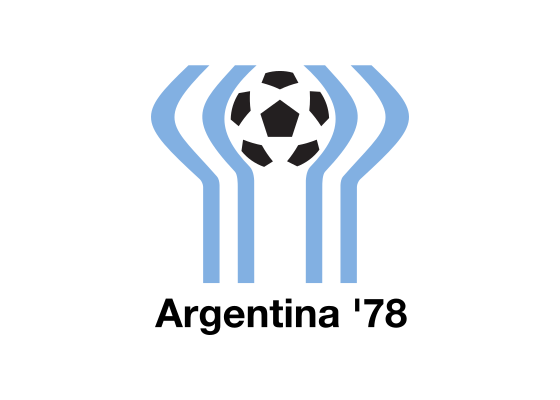
The 1978 FIFA World Cup logo features a tricolor design using dark gray (#231f20), sky blue (#82b0e2), and white (#ffffff), reflecting the colors of the Argentine flag. The composition combines abstract geometric forms that suggest movement and celebration while incorporating Argentina’s national identity. The blue and white are Argentina’s traditional colors, prominently displayed to honor the host nation. The dark gray provides grounding and contrast, ensuring the mark remains legible across various applications. The design has a dynamic quality that captures the energy of tournament play while maintaining the formal dignity expected of a major international sporting event.
Meaning and Symbolism
- Blue and White: Directly reference the Argentine flag, celebrating the host nation’s culture and the tournament’s location in South America.
- Abstract Forms: Suggest the global nature of football and the diverse nations coming together for competition.
- Dynamic Composition: Represents the movement, excitement, and passion that characterize both Argentine football culture and the World Cup tournament.
- Gray Foundation: Provides stability and ensures the logo maintains authority as the symbol of football’s premier international championship.
Design and History
The 1978 World Cup was held in Argentina between June 1 and 25, marking a significant moment for South American football. The tournament was won by the host nation, Argentina, who defeated the Netherlands 3-1 in the final after extra time at River Plate’s home stadium, Estadio Monumental, in Buenos Aires.
This victory was Argentina’s first World Cup title, making them the fifth team to be both hosts and world champions and the third South American team to win the tournament, following Brazil and Uruguay. Argentina, the Netherlands, and Brazil were the gold, silver, and bronze medalists respectively.
The tournament marked several firsts, including debut appearances by Iran and Tunisia. It was also the last World Cup to use the original format of 16 teams before expansion to 24 teams in subsequent tournaments.
The logo’s incorporation of Argentine national colors was a deliberate choice to celebrate the host nation while maintaining the international character of the World Cup. The design needed to work across television broadcasts, printed materials, and stadium signage, requiring clarity and strong color contrast.
Typography
Tournament materials used bold, modern typography that complemented the abstract logo design while ensuring international readability across different languages and media formats.
FAQ
Q: Why did Argentina host the 1978 World Cup?
A: Argentina was selected as the host nation by FIFA, and the tournament became a defining moment for Argentine football, culminating in their first World Cup title on home soil.
Q: What do the blue and white colors represent?
A: The blue and white are the colors of the Argentine flag, incorporated into the logo to honor the host nation and celebrate South American football culture.
Q: What was significant about the 1978 tournament?
A: It was Argentina’s first World Cup victory, making them the fifth nation to win as hosts, and it was the last tournament to feature only 16 teams before the competition expanded.
More logos with similar colors