The 1982 FIFA World Cup was the 12th FIFA World Cup, played in Spain from June 13 to July 11, won by Italy who defeated West Germany 3-1 in the final at the Santiago Bernabéu Stadium in Madrid.
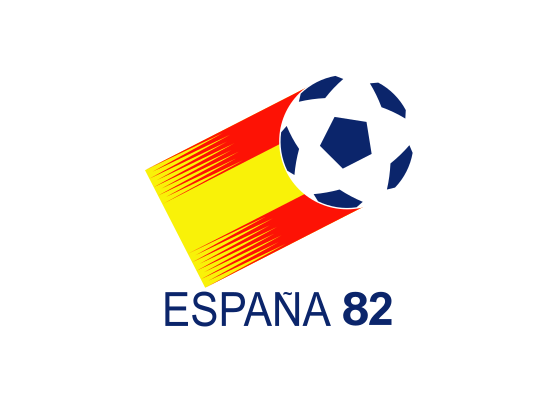
The 1982 FIFA World Cup logo presents a vibrant, colorful design using the colors of the Spanish flag: deep navy blue (#0b256b), bright yellow (#f9f208), bold red (#fd1205), and white (#ffffff). The composition creates an energetic, festive mark that captures the spirit of Spanish culture and the excitement of international football competition. The multiple colors are arranged in abstract geometric patterns that suggest movement, celebration, and the coming together of diverse nations. The yellow and red prominently feature Spain’s national colors, while the navy blue and white add contrast and international appeal. The overall effect is bold and optimistic, reflecting the expanded 24-team format introduced in this tournament.
Meaning and Symbolism
- Yellow and Red: Directly reference the Spanish flag, honoring the host nation and its vibrant cultural identity.
- Navy Blue: Provides depth and international credibility, balancing the brighter Spanish colors with traditional sporting authority.
- White Accents: Symbolize unity, fair play, and the universal nature of football across cultures and nations.
- Dynamic Forms: Suggest the energy and passion of Spanish football culture and the excitement of the expanded tournament format.
Design and History
The 1982 World Cup was won by Italy, who defeated West Germany 3-1 in the final held at Madrid’s Santiago Bernabéu Stadium, securing Italy’s third World Cup title and their first since 1938. Defending champions Argentina were eliminated in the second round, while Algeria, Cameroon, Honduras, Kuwait, and New Zealand made their first appearances in the finals.
This tournament featured several historic moments, including the first penalty shoot-out in World Cup competition. It was also the last World Cup to use two rounds of group stages, a format that would be abandoned in subsequent tournaments. All four semi-finalists were European, only the third time this had occurred in World Cup history.
In a memorable first-round match, Hungary defeated El Salvador 10-1, equalling the largest margin of victory ever recorded in the finals. The tournament’s expansion to 24 teams required a visual identity that could represent both the growing global reach of football and the specific character of the Spanish host nation.
The colorful, exuberant design reflected Spain’s position as a newly democratic nation eager to showcase its culture and hospitality to the world through football.
Typography
Tournament materials employed bold, contemporary letterforms that matched the energetic, colorful spirit of the logo while maintaining clarity for international audiences.
FAQ
Q: Who won the 1982 World Cup?
A: Italy won the tournament, defeating West Germany 3-1 in the final at Madrid’s Santiago Bernabéu Stadium for their third World Cup title and first since 1938.
Q: What was significant about the 1982 tournament?
A: It featured the first penalty shoot-out in World Cup history, expanded to 24 teams, and was the last to use two rounds of group stages.
Q: Why does the logo use yellow and red?
A: The yellow and red are the colors of the Spanish flag, incorporated to celebrate the host nation and its vibrant cultural identity.
More logos with similar colors