The 1994 FIFA World Cup was the 15th FIFA World Cup, hosted by the United States from June 17 to July 17, won by Brazil who defeated Italy 3-2 in a penalty shoot-out after a 0-0 draw, marking the first World Cup final decided on penalties.
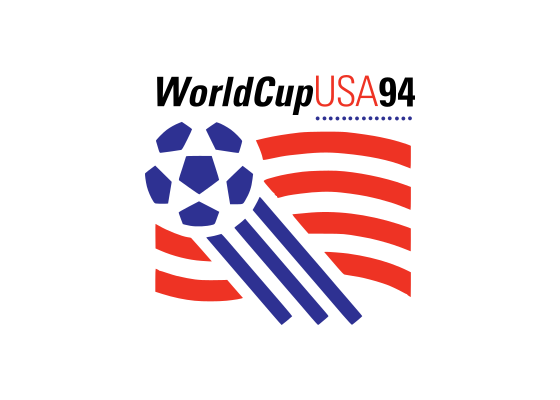
The 1994 FIFA World Cup logo uses a patriotic American color scheme of deep blue (#2e3192) and bright red (#ee3324), reflecting the red and blue from the United States flag. The design employs abstract geometric forms that suggest movement, stars, and celebration while maintaining a distinctly American character. The bold color combination creates high visual impact appropriate for a tournament hosted in a country where soccer was still building mainstream popularity. The composition balances American national identity with the international nature of the World Cup, using abstract forms that avoid literal flag imagery while still communicating the host nation’s colors.
Meaning and Symbolism
- Blue and Red: Reference the American flag colors, celebrating the United States as host while avoiding overly literal patriotic imagery.
- Abstract Forms: Suggest dynamism, growth, and the expansion of football into new markets and territories.
- Bold Colors: Create visibility and energy, reflecting the tournament’s goal of popularizing soccer in the United States.
- Modern Geometry: Represents American innovation and the tournament’s record-breaking commercial success.
Design and History
The United States was chosen as the host by FIFA on July 4, 1988, despite soccer’s relative lack of popularity compared to American football, baseball, and basketball. The tournament became the most financially successful in World Cup history, breaking records with overall attendance of 3,587,538 and an average of 68,991 per game. These attendance figures remained unsurpassed through 2018 despite the tournament’s expansion from 24 to 32 teams starting in 1998.
Brazil won the tournament after defeating Italy 3-2 in a penalty shoot-out at the Rose Bowl in Pasadena, California, after the match ended 0-0 after extra time. This was the first World Cup final decided on penalties, a dramatic conclusion that captured global attention. The victory made Brazil the first nation to win four World Cup titles, cementing their status as football’s most successful national team.
The tournament’s commercial and attendance success demonstrated football’s potential in the American market and helped pave the way for the establishment of Major League Soccer (MLS) in 1996. The logo’s use of American colors was a strategic choice to build local interest while maintaining the World Cup’s international prestige.
Typography
Tournament materials used bold, contemporary American-influenced typography that conveyed energy and excitement while remaining accessible to international audiences unfamiliar with soccer terminology.
FAQ
Q: Why was the 1994 World Cup historically significant?
A: It was the most financially successful World Cup in history, broke attendance records, and featured the first final decided by penalty shoot-out, while helping establish soccer’s viability in the American market.
Q: Who won the 1994 World Cup?
A: Brazil won the tournament, defeating Italy 3-2 on penalties after a 0-0 draw, becoming the first nation to win four World Cup titles.
Q: What do the blue and red colors represent?
A: The blue and red reference the colors of the American flag, celebrating the United States as host nation while maintaining international appeal through abstract design.
More logos with similar colors