The 2002 FIFA World Cup, branded as Korea Japan 2002, was the 17th FIFA World Cup held from May 31 to June 30 in South Korea and Japan, marking the first World Cup in Asia and the first jointly hosted by two nations.
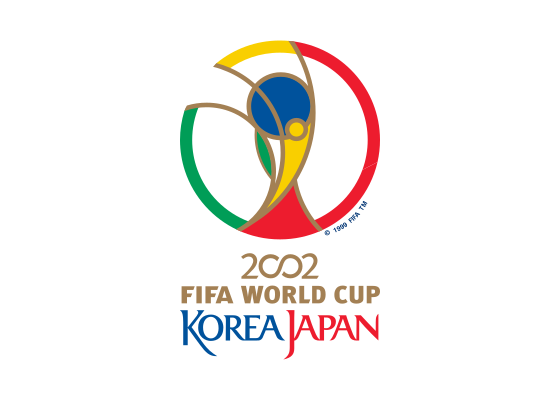
The 2002 FIFA World Cup logo features a vibrant, multi-colored design using navy blue (#003473), bright blue (#00529c), teal green (#009d57), bronze-tan (#a38054), vivid red (#ed1c2e), and golden yellow (#f9cf00). The composition celebrates the historic co-hosting arrangement between South Korea and Japan while representing the first World Cup held in Asia. The diverse color palette reflects Asian cultural vibrancy and the coming together of multiple nations and traditions. The design incorporates abstract forms that suggest movement, celebration, and the fusion of Eastern and Western football cultures. The multiple colors ensure the logo works across both host nations’ visual preferences while maintaining a unified tournament identity.
Meaning and Symbolism
- Multiple Colors: Represent the diverse cultures of Asia, the two host nations, and the global nature of the first World Cup outside Europe and the Americas.
- Navy and Blue Tones: Suggest professionalism and the traditional authority of the World Cup brand.
- Red and Gold: Reference colors significant in both Korean and Japanese cultures, honoring the host nations.
- Teal Green: Adds vitality and represents the fresh, groundbreaking nature of bringing the World Cup to Asia for the first time.
Design and History
The 2002 World Cup was the first to be held in Asia, the first outside the Americas or Europe, and the first jointly hosted by more than one nation. South Korea and Japan shared hosting duties, with the final match held at International Stadium in Yokohama, Japan. A field of 32 teams qualified, with China, Ecuador, Senegal, and Slovenia making their World Cup debuts.
The tournament featured several major upsets: defending champions France were eliminated in the group stage after earning a single point without scoring a goal, and second favorites Argentina also failed to progress from the group stage. South Korea’s remarkable run to the semi-finals, beating Portugal, Italy, and Spain along the way, became one of the tournament’s defining narratives.
The logo needed to represent both host nations equally while communicating the historic nature of the first Asian World Cup. The multi-colored approach allowed the design to work across different cultural contexts and appeal to diverse Asian audiences while maintaining the World Cup’s global prestige.
Brazil won the tournament, defeating Germany 2-0 in the final to claim their fifth World Cup title. The success of the jointly-hosted tournament demonstrated that the World Cup could thrive outside its traditional European and South American strongholds.
Typography
Tournament materials used contemporary typography that worked across Korean, Japanese, and Latin alphabets, ensuring consistent branding across all official communications in both host nations.
FAQ
Q: Why was the 2002 World Cup historically significant?
A: It was the first World Cup held in Asia, the first outside Europe and the Americas, and the first jointly hosted by two nations (South Korea and Japan).
Q: Which teams made their World Cup debuts in 2002?
A: China, Ecuador, Senegal, and Slovenia all made their first appearances at the World Cup finals in 2002.
Q: What were the major surprises of the 2002 tournament?
A: Defending champions France and favorites Argentina were eliminated in the group stage, while co-hosts South Korea reached the semi-finals, defeating Portugal, Italy, and Spain.
More logos with similar colors