The 2003 CONCACAF Gold Cup was the seventh edition of the biennial football championship for North America, Central America, and the Caribbean.
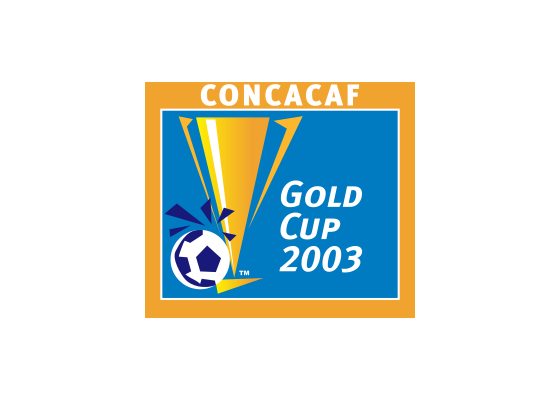
The logo features a dynamic rectangular composition that layers vibrant colors to create a sense of tournament energy and continental unity. The central element shows the Gold Cup trophy rendered in warm golden tones, positioned against overlapping blue panels that graduate from deep navy to bright cyan. An orange accent band sweeps across the lower portion of the design, creating visual movement. The white “2003” numerals appear prominently at the top, with “GOLD CUP” typography below in a bold sans-serif typeface. Small text identifying “CONCACAF” sits at the bottom of the composition.
Meaning and Symbolism
- Gold Cup Trophy: The central trophy silhouette represents the championship prize and the tournament’s prestigious status in North American football.
- Layered Blue Panels: The overlapping geometric shapes suggest the coming together of multiple nations and confederations for one shared competition.
- Orange Accent Band: The diagonal energy band conveys the excitement and forward momentum of tournament play.
- Graduated Blue Tones: The color progression from dark to light blue symbolizes the journey from group stages to the championship final.
Design and History
The 2003 Gold Cup marked a significant expansion in the tournament’s geographical footprint, being the first edition since 1993 to be held across multiple countries. The logo reflected this broader scope through its layered design language, suggesting unity across borders. The rectangular format departed from the circular motifs used in some previous editions, opting instead for a contemporary, broadcast-friendly shape that would reproduce well on television graphics and promotional materials.
The color palette drew from the bright, saturated tones that characterized early 2000s sports branding. The combination of deep blue, cyan, orange, and gold created high contrast, making the logo visible and legible across various applications, from stadium signage to small-scale print materials. This era of tournament design prioritized bold color blocking over subtle gradients, a trend visible throughout championship logos of the period.
The trophy element served as the visual anchor, positioned centrally to ensure immediate recognition of the tournament’s purpose. The designers chose to stylize rather than photographically render the cup, creating a graphic symbol that could scale effectively and maintain clarity at any size. This approach aligned with best practices for sports tournament identities, where versatility across media formats was essential.
Typography
The logo employs a condensed sans-serif typeface for the “GOLD CUP” wordmark, characterized by uniform stroke weights and tight letter spacing. The numerals “2003” use a slightly bolder weight to establish hierarchy and ensure the tournament year remains prominent. This typographic approach reflected the era’s preference for strong, authoritative letterforms in sports design, prioritizing legibility over decorative flourishes.
FAQ
Q: Why does the 2003 logo use a rectangular format instead of a circular one?
A: The rectangular shape provided better adaptation for television broadcast graphics and horizontal banner applications, which were increasingly important for tournament promotion in the early 2000s.
Q: What does the orange band represent in the design?
A: The orange accent creates visual movement and energy, suggesting the dynamic nature of tournament competition and providing a warm counterpoint to the cool blue tones.
Q: How did this logo differ from previous CONCACAF Gold Cup designs?
A: The 2003 edition adopted a more layered, geometric approach with stronger color blocking compared to the simpler, more illustrative designs of earlier tournaments.
More logos with similar colors