The 2005 CONCACAF Gold Cup was the eighth edition of the tournament, contested entirely in the United States in July 2005.
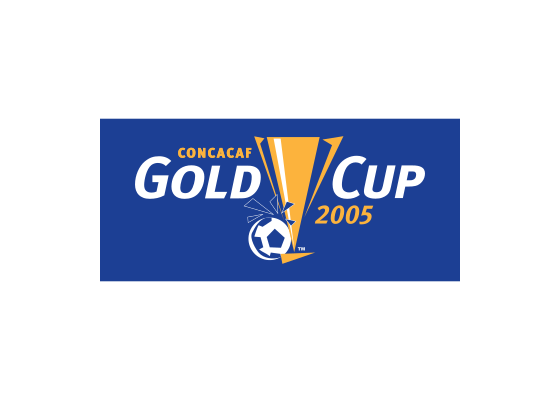
The logo presents a streamlined rectangular composition built around three primary colors. The design features bold “2005” numerals rendered in white, positioned prominently at the top of the mark. Below sits the “GOLD CUP” wordmark in matching white letters against a deep royal blue background. A stylized trophy silhouette in bright orange forms the visual centerpiece, created through geometric shapes that suggest the cup’s handles and body. The entire composition sits within a defined rectangular frame, with clean edges and sharp color transitions that create a crisp, broadcast-ready appearance.
Meaning and Symbolism
- Orange Trophy: The simplified cup silhouette in vibrant orange represents the championship prize and serves as the primary focal point of the identity.
- Royal Blue Background: The deep blue field provides stability and authority, colors traditionally associated with international football competitions.
- White Typography: The clean white letterforms ensure maximum legibility and create strong contrast against the blue ground.
- Geometric Simplification: The reduced, shape-based trophy design reflects a modern approach to sports branding, prioritizing clarity over detailed illustration.
Design and History
The 2005 Gold Cup logo represented a shift toward cleaner, more simplified tournament branding. Where the 2003 edition had employed multiple overlapping elements and color gradations, the 2005 mark reduced the palette to three essential colors and embraced a more direct visual language. This reflected broader design trends in mid-2000s sports branding, where clarity and reproduction efficiency increasingly drove aesthetic decisions.
The tournament format changed significantly this year, moving from four groups of three teams to three groups of four, creating more group stage matches and reducing the likelihood of tie-breaking scenarios. The logo’s straightforward composition mirrored this organizational clarity, presenting information hierarchically without visual ambiguity. The rectangular format continued from the previous edition, maintaining consistency with broadcast graphics standards while allowing for flexible application across digital and print media.
The orange trophy element became more abstract compared to previous renderings, using basic geometric forms to suggest rather than depict the Gold Cup. This approach ensured the mark would remain legible even at small sizes, an important consideration as mobile and digital media consumption grew. The design team prioritized functional clarity over decorative detail, understanding that the logo would need to perform across an expanding range of media contexts.
Typography
The wordmark employs a bold, extended sans-serif typeface with even stroke weights throughout. The letterforms feature squared terminals and minimal variation in character width, creating a stable, authoritative presence. The numerals “2005” use the same type family but at a larger scale, establishing clear visual hierarchy. This typographic treatment emphasized readability and strength, qualities essential for tournament branding meant to convey international sporting prestige.
FAQ
Q: Why did the 2005 logo simplify the visual approach compared to 2003?
A: The simplified design reflected evolving best practices in sports branding, where clarity and scalability across multiple media platforms became increasingly important.
Q: What significance does the orange color hold in the design?
A: Orange provides high visibility and energy, creating a warm, approachable counterpoint to the formal blue while ensuring the trophy element stands out clearly.
Q: How does this logo work across different applications?
A: The three-color palette and clean geometric shapes allow the mark to reproduce consistently across broadcast graphics, print materials, merchandise, and digital platforms without loss of clarity.
More logos with similar colors