The 2007 CONCACAF Gold Cup was the ninth edition of the football championship for North America, Central America, and the Caribbean, won by the United States over Mexico.
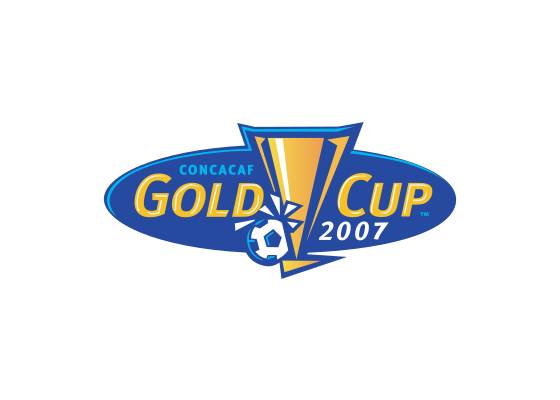
The logo adopts an abstract, shield-like composition featuring radiating bands of color that suggest both energy and unity. The design centers on a stylized trophy form created through layered arcs and curves in warm yellow and orange tones that graduate from light to deep amber. Behind this sits a field of royal blue with lighter cyan accents. The “2007” numerals appear integrated into the upper portion of the design, while “GOLD CUP” typography runs along the bottom in white letters. The overall form tapers upward, creating a flame-like or trophy silhouette that breaks from the strictly rectangular formats of previous editions.
Meaning and Symbolism
- Radiating Bands: The concentric arcs of color suggest the tournament’s reach across multiple nations and the radiating excitement of championship football.
- Warm-to-Cool Gradient: The progression from golden yellow through orange to deep blue represents the heat of competition cooling into the clarity of championship victory.
- Shield Silhouette: The overall shield-like form conveys protection, heritage, and the heraldic traditions associated with football crests.
- Upward Movement: The tapering, ascending design suggests aspiration, achievement, and the journey toward lifting the trophy.
Design and History
The 2007 Gold Cup logo marked a departure from the more rigid rectangular compositions of 2003 and 2005, embracing organic curves and a more dynamic silhouette. This shift reflected the tournament’s return to a format focused solely on CONCACAF member nations, without guest teams from other confederations. The design aimed to celebrate regional identity through a shape that evoked both modern sports branding and traditional football crest symbolism.
The expanded color palette, featuring multiple gradations of yellow and orange, represented a move toward richer visual complexity. Where previous editions had limited themselves to three or four distinct colors, the 2007 mark employed subtle tonal shifts to create depth and dimension. This approach aligned with mid-2000s trends in sports design, where digital rendering capabilities allowed for more nuanced color work that could still reproduce effectively in print.
The abstract trophy form avoided literal representation, instead suggesting the championship prize through shape and color rather than detailed illustration. This conceptual approach gave the logo a more contemporary feel compared to earlier, more pictorial Gold Cup marks. The design team chose to integrate the typography more fully into the overall composition rather than treating it as separate elements, creating a unified mark that functioned as a complete symbol rather than a logo with added text.
Typography
The numerals and wordmark use a custom sans-serif typeface with slightly condensed proportions and medium weight strokes. The white letterforms sit cleanly against the darker background elements, with the “2007” positioned in the upper arc and “GOLD CUP” anchoring the bottom edge. The integration of type with graphic elements creates cohesion, though the letterforms maintain sufficient separation to ensure readability across applications.
FAQ
Q: Why did the 2007 design move away from rectangular formats?
A: The organic, shield-like shape created a more distinctive tournament identity and aligned with football’s traditional crest-based visual language, differentiating this edition from previous geometric approaches.
Q: What does the flame-like upward movement represent?
A: The ascending form suggests both the literal trophy being lifted in victory and the aspirational journey of teams competing for the championship.
Q: How does this logo relate to CONCACAF’s broader visual identity?
A: The shield form and warm color palette connected to regional football traditions while maintaining the confederation’s contemporary branding standards through clean typography and clear hierarchy.
More logos with similar colors