The 2010 FIFA World Cup, held in South Africa from June 11 to July 11, was the first World Cup hosted on the African continent.
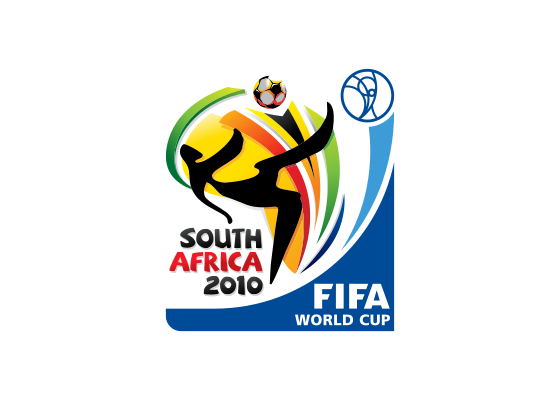
The logo features a dynamic abstract figure composed of fluid, ribbon-like forms that create the silhouette of a person heading or reaching for a football. The design employs bold, saturated colors including deep blue, bright green, vivid red, orange, and lighter gray-blue tones that flow into one another, creating a sense of movement and energy. The ribbons curve and twist through space, their overlapping creates the negative space of a football at the top of the composition. Below the graphic mark sits the text “2010 FIFA WORLD CUP SOUTH AFRICA” in a clean sans-serif typeface. The overall form suggests celebration, athleticism, and the continent’s vibrant cultural energy.
Meaning and Symbolism
- Flowing Ribbons: The curved, interconnected bands represent unity, movement, and the bringing together of nations through sport.
- African-Inspired Colors: The palette draws from South African flag colors and the bright, saturated hues found throughout African art and textiles.
- Figure in Motion: The human silhouette celebrates the athlete, the physical beauty of football, and the continent’s contribution to the sport.
- Negative Space Football: The ball formed by surrounding curves symbolizes the tournament’s focus and the shared object of global football passion.
Design and History
The 2010 FIFA World Cup logo marked a historic moment as the first tournament emblem designed for an African host nation. FIFA and the South African organizing committee commissioned a mark that would celebrate African identity while maintaining the international prestige associated with World Cup branding. The result departed significantly from previous geometric or illustrative approaches, embracing fluid, organic forms that suggested both human movement and decorative patterning.
The design drew inspiration from South Africa’s cultural diversity and artistic traditions. The ribbon-like forms echoed patterns found in traditional African textiles and beadwork, while the bright color palette reflected both the South African flag and the continent’s visual vibrancy. This cultural grounding gave the logo a distinctive character that clearly differentiated it from European or Asian tournament marks, immediately communicating the historic nature of the 2010 edition.
The abstract figure represented a celebration of African football and athletes, avoiding literal geographic symbols like maps or animals in favor of human achievement and movement. This approach aligned with FIFA’s goal of highlighting football as a unifying force while respecting the host nation’s desire for representation that went beyond stereotypical imagery. The design’s success lay in balancing cultural specificity with universal athletic themes.
The mark’s fluid composition required sophisticated reproduction techniques, particularly for textile and embroidered applications common in football merchandising. The overlapping, semi-transparent ribbons created complexity that needed careful color management across print, digital, and physical media. This technical challenge was characteristic of late 2000s design, where digital rendering capabilities often outpaced practical production considerations.
Typography
The supporting text employs Arial or a similar neutral sans-serif typeface, set in uppercase letters with generous tracking. The straightforward typographic treatment ensures clarity and allows the dynamic graphic mark to dominate, with text serving a purely informational function. The hierarchy places “2010 FIFA WORLD CUP” in larger type, with “SOUTH AFRICA” below in a slightly smaller scale, establishing clear informational order.
FAQ
Q: Who designed the 2010 FIFA World Cup logo?
A: While FIFA managed the overall branding process, the specific designer or agency responsible for the final mark has not been widely publicized, typical of many large sporting event identities developed through committee processes.
Q: Why use abstract ribbons rather than South African symbols like animals or landmarks?
A: The ribbon form celebrated human achievement and cultural artistry while avoiding potentially reductive national symbols, creating a mark that felt both African and universally athletic.
Q: How was this logo received compared to previous World Cup designs?
A: The 2010 mark was generally praised for its energy and cultural authenticity, though some critics found it less immediately iconic than simpler, more geometric tournament logos from earlier decades.
More logos with similar colors