The 2018 FIFA World Cup, held in Russia from June 14 to July 15, was the first World Cup hosted in Eastern Europe.
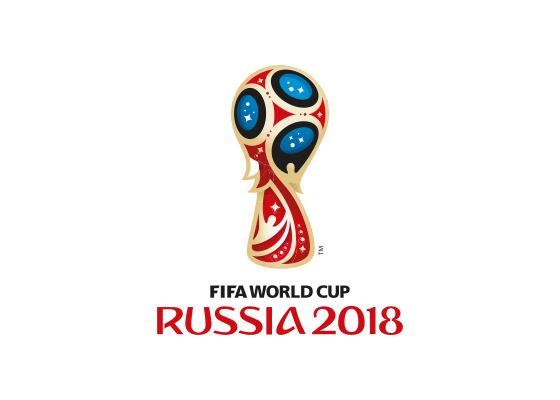
The logo presents an abstract composition inspired by the FIFA World Cup trophy, rendered through flowing, upward-reaching forms that suggest both the trophy’s silhouette and the iconic shape of Russian nesting dolls. The design employs a sophisticated color palette dominated by deep navy blues, vibrant reds, warm golds, and coral accents arranged in curved bands that create depth and movement. The forms sweep upward and curve around negative space, their overlapping creates a dynamic sense of rotation and celebration. Below the graphic mark sits “RUSSIA 2018” in a contemporary sans-serif typeface, with the FIFA World Cup wordmark positioned beneath. The overall composition balances cultural specificity with universal sporting symbolism.
Meaning and Symbolism
- Trophy Silhouette: The upward-reaching forms evoke the iconic shape of the FIFA World Cup trophy, immediately communicating the tournament’s purpose.
- Matryoshka Inspiration: The curved, nested shapes reference Russian nesting dolls, connecting the design to host nation cultural traditions.
- Russian Flag Colors: The red, blue, and white palette draws directly from Russia’s national colors, grounding the tournament in its location.
- Upward Movement: The ascending, celebratory forms suggest victory, achievement, and the joy of lifting the trophy.
Design and History
The 2018 FIFA World Cup logo, developed by Portuguese agency Brandia Central, marked the first tournament emblem designed for an Eastern European host nation. The design team faced the challenge of representing Russian cultural identity while maintaining the international prestige and recognition required of World Cup branding. The solution drew inspiration from matryoshka dolls, traditional Russian nesting toys that have become global symbols of Russian craft and design.
The curved, flowing forms created a more dynamic composition compared to the geometric approaches of some previous World Cup logos. The design employed sophisticated color gradations within each band, creating depth and dimensionality that gave the mark a contemporary, premium feel. This technical approach aligned with 2010s trends in sports branding, where subtle gradients and layered forms replaced the flat, simplified aesthetics that had dominated earlier in the decade.
The logo’s development involved extensive consultation with FIFA, the Russian Football Union, and cultural advisors to ensure the design resonated with Russian identity while avoiding stereotypical representations. The choice to reference matryoshka dolls through abstract geometric forms rather than literal illustration allowed the mark to feel sophisticated and modern rather than folksy or traditional. This balance proved crucial to the logo’s international reception.
The color palette extended beyond the simple red, blue, and white of the Russian flag, incorporating warm golds, corals, and multiple tonal variations that created visual richness. These additional hues provided flexibility for tournament applications while maintaining cohesion with the core national colors. The expanded palette also ensured the mark would stand out against various backgrounds and reproduce effectively across broadcast graphics, signage, and digital platforms.
The 2018 mark successfully walked the line between cultural celebration and universal sports branding, creating a distinctive tournament identity that clearly communicated its Russian context while remaining accessible to global audiences. The design influenced subsequent FIFA tournament identities by demonstrating how abstract geometric forms could reference specific cultural traditions without relying on literal symbols.
Typography
The supporting text employs a clean, geometric sans-serif typeface with even stroke weights and wide character spacing. “RUSSIA 2018” receives prominent treatment in uppercase letters, with the full “FIFA WORLD CUP” wordmark below in a smaller scale. The neutral typographic approach ensures clarity and allows the colorful, dynamic graphic mark to dominate visually, with text serving an informational rather than decorative function.
FAQ
Q: How does the logo reference Russian culture?
A: The curved, nested forms draw inspiration from matryoshka (Russian nesting dolls), abstracting their characteristic shapes into a modern, geometric composition that celebrates Russian craft traditions.
Q: Who designed the 2018 FIFA World Cup logo?
A: Portuguese branding agency Brandia Central developed the logo, working closely with FIFA and Russian stakeholders to create a mark that balanced cultural specificity with international appeal.
Q: Why use abstract forms rather than literal Russian symbols?
A: Abstract geometric interpretation allowed the design to reference cultural traditions in a sophisticated, contemporary way while avoiding potentially stereotypical or overly literal representations that might feel less universal.
More logos with similar colors