The 2019 CONCACAF Gold Cup was the fifteenth edition of the biennial tournament and the first expanded to include sixteen teams instead of twelve.
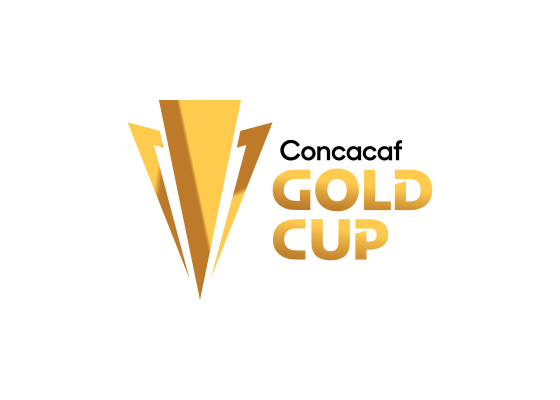
The logo adopts a refined, elegant approach centered on a stylized crown form rendered in rich golden tones. The design features geometric shapes that create the silhouette of a royal crown, with pointed elements suggesting both crown peaks and upward-reaching trophy forms. The color palette employs warm metallic golds graduating from deep bronze to bright golden yellow, creating dimensional depth. A deep navy blue background provides strong contrast and grounds the composition in CONCACAF’s traditional colors. The “2019” numerals and “GOLD CUP” wordmark appear in clean, contemporary typography, with the text positioned to complement rather than compete with the dominant crown symbol.
Meaning and Symbolism
- Crown Form: The royal crown silhouette directly references the tournament’s name and represents championship authority, prestige, and sovereign achievement.
- Gold Gradations: The warm metallic tones from bronze through gold suggest the precious metal of the trophy and the value of championship victory.
- Upward Points: The crown’s ascending peaks symbolize aspiration, competitive excellence, and the reaching toward glory.
- Navy Foundation: The deep blue ground provides stability and connects to CONCACAF’s established visual identity while allowing the gold to appear luminous.
Design and History
The 2019 CONCACAF Gold Cup logo represented a strategic shift toward more literal, heraldic symbolism after years of abstract, flame-like tournament marks. The design team chose to directly visualize the “Gold Cup” name through crown imagery, creating an immediately readable symbol that communicated championship prestige without requiring interpretation. This approach reflected broader trends in late 2010s sports branding, where clarity and instant recognition increasingly took precedence over abstract conceptual designs.
The tournament’s expansion from twelve to sixteen teams marked a significant organizational milestone, and the logo’s refined, premium aesthetic signaled this evolution. The crown form suggested elevated status and greater competitive depth, aligning visual identity with the tournament’s growing scope. The designers created a mark that felt more formal and prestigious compared to the energetic, flame-based logos of previous editions, communicating maturity and international stature.
The color palette focused on creating a luxurious, metallic appearance through careful gradient work. Unlike the extensive color transitions of 2015, the 2019 mark employed more restrained gradations that created depth while remaining practical for reproduction across various media. This balance between visual sophistication and production efficiency demonstrated learning from previous editions, where overly complex gradients had created challenges for certain applications.
The crown form also connected to football’s traditional heraldic visual language, where crests, shields, and royal symbols have long signified championship achievement. By embracing this heritage rather than pursuing purely contemporary abstraction, the design positioned the Gold Cup within a broader tradition of football tournament branding. The approach proved successful in creating a distinctive mark that felt both modern in execution and rooted in sporting tradition.
Typography
The wordmark employs a clean, geometric sans-serif typeface with slightly extended proportions and even stroke weights. The letterforms maintain a contemporary feel while conveying authority and formality appropriate to championship branding. The “2019” numerals appear in a larger scale, establishing hierarchy, while “GOLD CUP” sits below in proportionally smaller letters. The neutral typographic treatment allows the elaborate crown symbol to dominate while ensuring all text remains highly legible.
FAQ
Q: Why did the 2019 logo move away from flame imagery to a crown?
A: The crown form provided more literal, immediate communication of championship prestige while marking the tournament’s expansion to sixteen teams, signaling organizational evolution and elevated status.
Q: How does this logo compare to previous Gold Cup designs?
A: The 2019 mark adopted a more refined, heraldic approach compared to the dynamic, abstract flame compositions of 2007-2015, reflecting maturity and greater formality in tournament branding.
Q: What do the gold gradations represent?
A: The warm metallic tones from bronze to bright gold suggest the precious metal of the championship trophy while creating visual depth and a premium, luxurious appearance.
More logos with similar colors