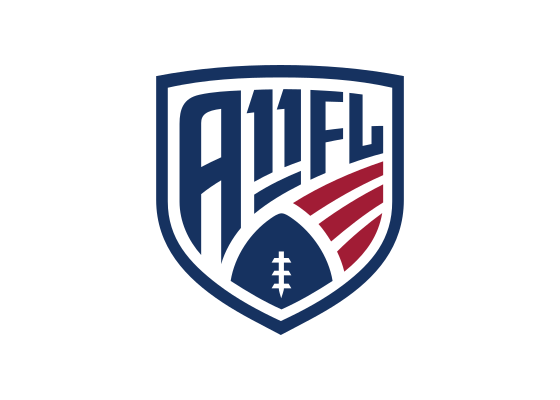
The A-11 Football League logo represented a proposed professional American football league announced in 2013 that planned to use modified rules allowing all eleven offensive players to be eligible receivers, creating a more wide-open game before folding without ever playing.
The logo features a shield-shaped badge composition incorporating the “A-11” wordmark with bold typographic treatment. The design employs a patriotic color palette of navy blue and deep red that aligns with American football traditions and references the sport’s cultural significance in the United States. The shield format evokes heraldic emblems and team badges, creating instant associations with competitive athletics and organizational identity. The mark balances aggressive athletic energy with the credibility needed to attract players, investors, and television partners to a startup league competing against the entrenched NFL. The composition suggests both innovation through the prominent “11” reference and tradition through conventional sports branding tropes.
Meaning and Symbolism
- Shield Shape: Communicates strength, defense, and team identity while following established conventions in American sports league branding.
- A-11 Designation: Directly references the league’s central innovation, where “All 11” offensive players could potentially be eligible receivers under modified rules.
- Navy and Red Palette: Evokes American patriotism and football tradition while providing high contrast for television broadcasts and merchandise.
- Bold Typography: Projects confidence and aggressive athleticism appropriate for a contact sport while ensuring readability on uniforms and signage.
Design and History
The A-11 Football League emerged during a period when several startup football leagues attempted to challenge NFL dominance by offering spring and summer schedules. The league’s branding needed to communicate both innovation and legitimacy, a difficult balance for an unproven entity with no game history. The shield badge format borrowed credibility from established leagues while the prominent numerical designation emphasized the rules innovation that differentiated A11FL from competitors.
The league announced plans to revive several United States Football League franchise names from the 1980s, attempting to tap into nostalgia for that defunct spring league. This strategy influenced the visual identity, which needed to feel both contemporary and connected to football heritage. The shield composition served this dual purpose, appearing modern in execution while employing a format familiar from decades of American sports branding.
Despite announcing eight franchises and planning televised showcase games for 2014, the league folded before taking the field. This fate befell numerous football startup leagues that struggled to secure adequate financing, television deals, and player talent in competition with the NFL’s entrenched market position. The logo represents the aspirational branding of a venture that never progressed beyond the planning stage, joining a long history of failed challenger leagues in American professional sports.
The A-11 concept itself, allowing all offensive players to potentially receive passes, aimed to create a more exciting, high-scoring style of play compared to the NFL’s more conservative offensive strategies. The logo’s energetic composition attempted to visually communicate this promise of innovation and entertainment.
Typography
The wordmark employs a bold, condensed sans-serif with strong vertical emphasis and aggressive angles. The letterforms feature sharp terminals and tight spacing that create density and impact, essential for reproduction on athletic uniforms and promotional materials. The “A” and “11” receive equal visual weight, emphasizing the complete brand name rather than treating the number as secondary. This typographic approach balances readability with the visual punch expected in competitive sports branding.
FAQ
Q: What did the “A-11” name actually mean? A: It referenced the league’s central innovation, where modified rules would allow “All 11” offensive players to potentially be eligible receivers, theoretically creating a more wide-open, high-scoring game compared to traditional football.
Q: Why did the league fail before ever playing? A: Like many startup football leagues, the A11FL struggled to secure adequate financing, television contracts, and player commitments while competing against the NFL’s dominant market position. The league folded in the planning stage without ever conducting a regular season.
Q: How does the shield shape connect to the league’s innovative rules? A: While the shield follows conventional sports branding rather than emphasizing innovation, the overall identity attempted to balance football tradition with the promise of a more exciting, receiver-friendly game under modified rules.
More logos with similar colors