Accenture is a multinational professional services company providing strategy, consulting, digital, technology, and operations services to 95 of the Fortune Global 100 companies.
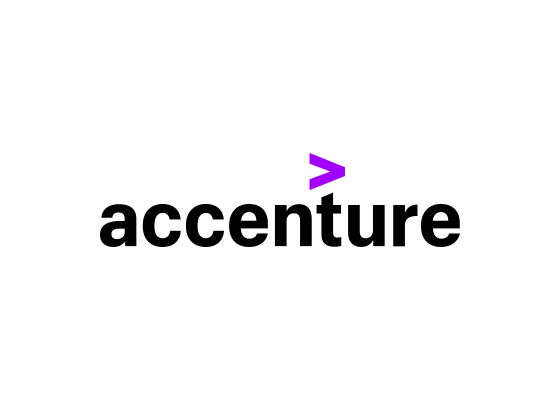
The Accenture logo features the company name in lowercase letters with a distinctive “greater than” symbol positioned above the letter “t,” creating a visual accent that reinforces the brand name’s meaning. The mark uses a vibrant purple color that distinguishes it from the navy blues and blacks typical of professional services firms. The lowercase treatment makes the brand feel approachable and modern rather than formal and distant, while the accent symbol serves as both a typographic element and a directional indicator suggesting forward momentum and future focus.
Meaning and Symbolism
- Greater Than Symbol: Represents exceeding expectations and moving forward into the future
- Lowercase Typography: Conveys approachability and accessibility rather than corporate formality
- Purple Color: Suggests innovation, creativity, and ambition distinct from traditional consulting firms
- Accent Mark Position: Creates visual emphasis on the brand name while suggesting progress and direction
Design and History
Accenture adopted this identity in November 2000 following its separation from Arthur Andersen, requiring a complete rebrand. The name “Accenture” emerged from an intensive three-month research process evaluating over 50 proposed words. Kim Petersen of Andersen Consulting suggested the name, which combines “accent” and “future,” literally meaning to put emphasis on what’s ahead.
This naming and visual strategy represented a deliberate departure from the conservative aesthetics of traditional consulting firms. At a time when competitors used formal corporate identities with full capitals and conservative colors, Accenture’s lowercase wordmark and purple palette signaled a different approach focused on innovation and digital transformation.
The accent symbol over the “t” serves multiple purposes beyond simple visual interest. It marks the brand name linguistically, creates a memorable visual hook, and functions as an arrow pointing forward. This multifaceted symbol allowed Accenture to communicate complex positioning in a simple graphic gesture.
As the company grew to employ over 459,000 people across 120 countries, the logo’s simplicity proved valuable for consistent reproduction across countless contexts. The identity works equally well on business cards and building facades, in PowerPoint presentations and mobile apps. The bold purple ensures visibility while the clean typography maintains legibility at any scale.
The logo helped establish Accenture’s identity separate from its accounting firm origins, positioning the company as a technology and innovation consultancy appropriate for the digital age.
Typography
The Accenture wordmark employs Rotis Sans Serif 75 Extra Bold, a humanist sans-serif typeface that balances geometric structure with subtle organic qualities. The extra bold weight provides strong presence while the typeface’s proportions maintain approachability.
FAQ
Q: What does the “greater than” symbol in the Accenture logo represent?
A: The symbol serves multiple purposes: it creates the “accent” suggested by the brand name, points toward the future, and symbolizes exceeding expectations and moving forward.
Q: Why does Accenture use lowercase letters?
A: The lowercase typography makes the brand feel approachable and accessible rather than formal and distant, distinguishing Accenture from traditional consulting firms using formal capital letters.
Q: Where does the name “Accenture” come from?
A: The name combines “accent” and “future,” suggested by Kim Petersen during a three-month naming process in 2000, literally meaning to put emphasis on what lies ahead.