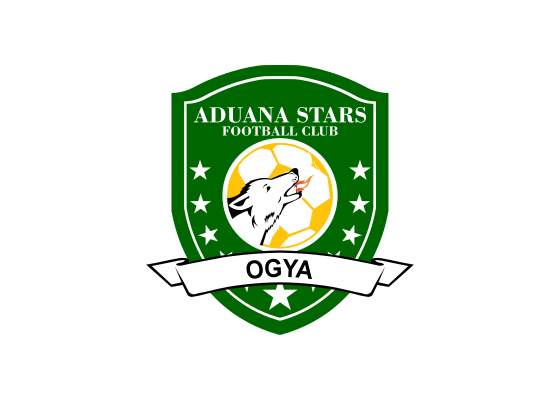
The Aduana Stars badge combines vibrant orange-to-gold gradients with green accents in a shield format to represent this Ghanaian football club that made history by winning the Premier League at their first attempt.
The crest employs a traditional shield silhouette filled with an energetic color palette progressing through multiple shades of orange, red, and gold, complemented by green and white elements. The warm gradient creates visual movement and energy befitting the club’s “Stars” name and their remarkable debut season success. The design incorporates symbolic elements referencing both the club identity and location in Dormaa Ahenkro, Bono Region. The shield format aligns with Ghanaian and broader African football heraldic conventions while the vibrant color treatment distinguishes Aduana from clubs using more conservative palettes.
Meaning and Symbolism
- Shield form: Represents club identity and the traditional heraldic structure common in African football
- Orange-to-gold gradient: Suggests energy, ambition, and the club’s stellar first-season championship
- Green accents: May reference Ghana’s national colors or the agricultural Bono Region landscape
- Star symbolism: Directly represents the club name while suggesting excellence and aspiration
Design and History
Aduana Stars achieved what most expansion clubs only dream about: winning the Ghana Premier League in their debut season with 53 points, becoming the ninth club to capture the title in the league’s 54-year history. This extraordinary accomplishment required branding that projected both newcomer energy and championship caliber, a balance the vibrant orange-gold palette attempts to achieve.
The club name “Aduana” connects to the Dormaa Ahenkro community and local identity, while “Stars” signals ambition beyond regional football. The badge needed to honor these local roots while projecting the confidence appropriate for a club entering top-flight competition with championship aspirations.
The orange-red-gold color progression creates distinctive visibility in Ghanaian football, where many clubs employ green, yellow, and red combinations derived from national flag colors. Aduana’s warmer palette provides differentiation while the inclusion of green maintains subtle connection to Ghanaian sporting tradition.
The shield format reflects African football’s strong connection to heraldic badge traditions inherited from colonial football structures but adapted to local identities. Many Ghanaian clubs employ shields, creating category consistency while internal design elements and color treatments create individual club differentiation.
The vibrant, multi-shade gradient approach suggests a modern club unbound by historical conservative design conventions. As a relatively new entrant to Ghana’s Premier League, Aduana could embrace contemporary aesthetics without contradicting decades of established visual identity, allowing creative freedom that longer-established clubs might avoid.
The championship success in their debut season gave immediate credibility to the ambitious visual identity. The badge represents not just aspirational branding but proven excellence, transforming the “Stars” name from metaphorical hope into literal achievement symbolized by the championship trophy.
Typography
The badge incorporates the club name in letterforms that complement the shield structure, typically using bold treatments that maintain legibility across jerseys, scarves, and supporter materials.
FAQ
Q: How did Aduana Stars win the league in their first season? A: Aduana Stars FC captured the Ghana Premier League title with 53 points in their debut top-flight season, becoming only the ninth club to win the championship in the league’s 54-year history.
Q: What does Aduana mean? A: Aduana connects to the club’s base in Dormaa Ahenkro in Ghana’s Bono Region, representing local community identity in Ghanaian football.
Q: Why use such vibrant colors instead of Ghana’s flag colors? A: The orange-red-gold palette creates differentiation in Ghanaian football where many clubs employ green-yellow-red combinations, while still including green as subtle connection to national sporting tradition.
More logos with similar colors