Super League Greece Logos
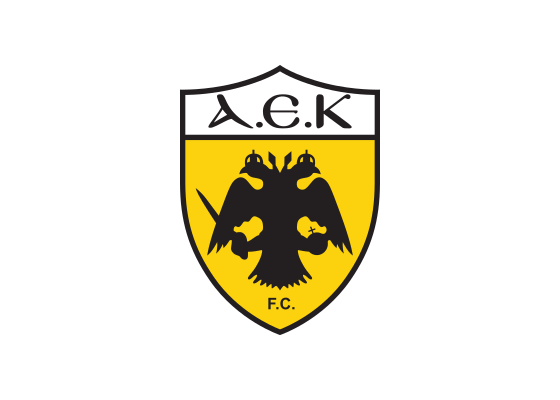
The AEK Athens logo represents one of Greece’s three most successful football clubs, established in 1924 by Greek refugees from Constantinople.
The AEK Athens crest employs the classic shield shape favored by European football clubs, rendered in black, gold, and white. The dominant golden yellow is vibrant and unmistakable, immediately distinguishing the club from competitors in the Super League Greece. The shield contains the club’s initials and symbolic elements that reference its founding by refugees displaced during the Greco-Turkish War. The black and gold combination creates a regal, powerful impression that matches the club’s competitive history and its distinction as the only Greek team to have won all competitions organized by the Hellenic Football Federation.
Meaning and Symbolism
- Shield Form: Represents protection and strength, honoring the resilience of Greek refugees who founded the club in the wake of displacement.
- Golden Yellow: Symbolizes glory, achievement, and the 30 national titles AEK has accumulated since its establishment.
- Black Accents: Add gravitas and authority, reflecting the serious competitive spirit required to reach UEFA Cup semi-finals and Champions League group stages.
- Byzantine Eagle: References Constantinople heritage and the Eastern Roman Empire connection to the club’s refugee founders.
Design and History
AEK Athens was born from displacement and loss, founded by Greeks forced to flee Constantinople after the Greco-Turkish War. This origin story imbues the logo with deeper significance than typical football club badges. The Byzantine double-headed eagle that often appears in AEK’s fuller crest designs connects the club to Constantinople’s Byzantine past, creating continuity between the lost homeland and the new community established in Athens.
The gold and black color scheme emerged as the club’s identifying colors early in its history. These colors appear consistently across all AEK branding, from match kits to stadium signage. The gold particularly stands out in Greek football, where blues and greens dominate competitor palettes. This visual differentiation proved strategically important as AEK competed with Olympiacos and Panathinaikos for supremacy in Greek football.
The shield design has been refined over decades but maintains core elements that connect modern supporters to the club’s founding generation. This continuity matters deeply in European football, where club identity spans generations and family allegiance passes from grandparents to grandchildren. AEK supporters in Nea Filadelfeia, the Athens suburb where the club is now based, recognize the gold and black as symbols of both sporting achievement and refugee resilience.
AEK’s European competition successes, including being the first Greek team to reach the European Cup quarter-finals, demanded a logo with international credibility. The shield format and refined execution signal a club that belongs on the continental stage, competing against established European powers.
Typography
The AEK lettering within the shield uses bold, geometric letterforms that prioritize clarity and impact. The typography needs to remain legible on television broadcasts, printed scarves, and digital platforms, so the straightforward character design serves practical purposes while maintaining the badge’s authoritative presence.
FAQ
Q: What do the colors gold and black represent for AEK Athens? A: The golden yellow symbolizes glory and the club’s extensive trophy collection of 30 national titles, while the black adds authority and reflects the competitive intensity that has carried AEK to European semi-finals.
Q: Why is the Byzantine eagle associated with AEK Athens? A: The club was founded in 1924 by Greek refugees from Constantinople after the Greco-Turkish War. The Byzantine double-headed eagle connects AEK to Constantinople’s Eastern Roman Empire heritage, honoring the founders’ lost homeland.
Q: How does AEK’s logo distinguish it from other Greek football clubs? A: The distinctive gold and black color scheme sets AEK apart from competitors in the Super League Greece, most of whom use blues, greens, or reds. This visual differentiation reinforces AEK’s unique identity and refugee founding story.
More logos with similar colors