Afterpay is an Australian financial technology company offering buy-now-pay-later services that allow consumers to split purchases into interest-free installments.
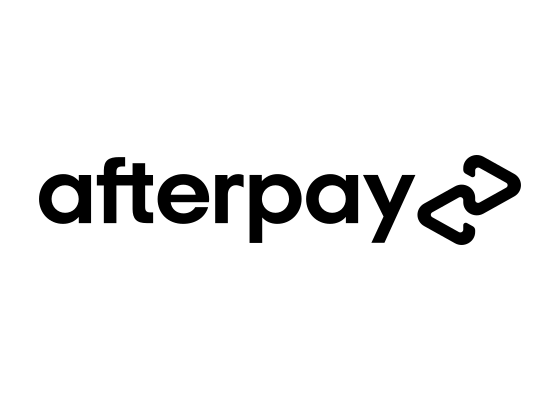
The Afterpay logo consists of a custom wordmark set entirely in lowercase sans-serif letters, rendered in solid black. The typeface features distinctive characteristics, particularly in the “a” and “y” letterforms, which use simplified geometric construction. The name runs as a single word without breaks, emphasizing the seamless nature of the payment experience. The letters maintain consistent weight throughout with generous spacing between characters, creating an open, modern appearance that feels accessible rather than corporate. The lowercase styling gives the brand a friendly, approachable personality that contrasts with the typically formal presentation of financial services companies.
Meaning and Symbolism
- Lowercase letters: Projects approachability and youth-market appeal, positioning Afterpay as a modern alternative to traditional credit services that might intimidate younger consumers.
- Single-word composition: Emphasizes the instant, streamlined payment process where “after” and “pay” combine into one frictionless action.
- Black color: Provides financial credibility and sophistication while remaining neutral enough to integrate seamlessly with retailer checkout experiences.
- Geometric letterforms: Suggests the precision and reliability required in financial transactions while maintaining a contemporary, tech-forward aesthetic.
Design and History
Afterpay launched in 2014 as Australian entrepreneurs Nick Molnar and Anthony Eisen identified an opportunity to serve millennials and Gen Z consumers who avoided traditional credit cards. The brand needed to feel trustworthy enough to handle financial transactions while remaining approachable enough to appeal to younger shoppers. The lowercase wordmark struck this balance, appearing friendly without sacrificing credibility.
The name itself communicates the core value proposition directly: customers receive their purchases immediately and pay after the fact. By combining these words into a single unit, the logo reinforces the seamlessness of the experience. The custom typeface distinguishes Afterpay from competitors while the black color allows it to integrate cleanly with merchant websites and checkout flows without visual conflict.
As Afterpay expanded internationally and eventually merged with Square (now Block) in 2021, the logo remained consistent. This stability helped maintain brand recognition across markets even as the company scaled from Australian startup to global fintech player. The wordmark’s simplicity made it highly adaptable, working equally well on mobile screens, retail signage, and marketing materials without modification.
The design reflects a broader shift in financial services branding away from traditional bank aesthetics toward more consumer-friendly, technology-driven identities. Afterpay’s logo positions the service as software rather than banking, which aligned with how target customers preferred to think about payment options.
Typography
The Afterpay wordmark uses a custom sans-serif typeface with geometric foundations and humanist touches. The lowercase “a” features a simple bowl without a tail, while the “y” uses a straight descender rather than a curved one. The “p” maintains a consistent circular bowl that echoes the “a” forms, creating visual rhythm across the word. Letter spacing is slightly wider than standard text settings, giving the mark breathing room and preventing it from feeling cramped or rushed.
FAQ
Q: Why does a financial services company use lowercase letters?
A: Afterpay targets younger consumers who often view traditional financial institutions as intimidating or inaccessible. The lowercase styling creates a friendlier, more relatable personality that reduces psychological barriers to adoption.
Q: Has the Afterpay logo changed since the Square acquisition?
A: The logo has remained consistent through the acquisition, maintaining brand recognition and customer trust. This stability was strategic as Afterpay continued operating as a distinct brand within Block’s portfolio.
Q: What makes the Afterpay wordmark different from standard typefaces?
A: The custom letterforms, particularly the simplified “a” and “y” characters, give Afterpay a distinctive appearance that helps it stand out in crowded checkout environments while remaining highly legible at small sizes.