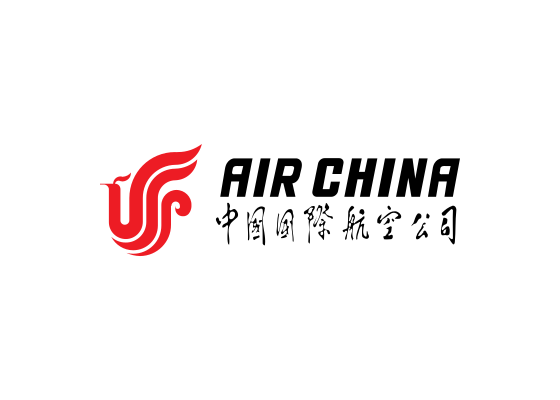
The Air China logo features a stylized red (#ed1c24) phoenix designed by renowned Chinese artist Han Meilin, ingeniously incorporating the hidden letters “VIP” within its calligraphic brushstrokes.
The Air China emblem depicts a fenghuang (Chinese phoenix) rendered in vivid Chinese red (#ed1c24), composed of elegant, flowing calligraphic lines. The phoenix faces backward, symbolizing flights from East to West, the primary direction of Air China’s international routes. The design was inspired by the head of a Han dynasty bronze stick unearthed in Yunnan, where parallel lines had been transformed into a phoenix motif. Han Meilin adapted these parallel lines to form not only the phoenix shape but also the cleverly concealed letters “VIP,” making the logo both a cultural emblem and an aspirational statement about service quality.
The Chinese characters for “Air China” that accompany the phoenix mark were written in calligraphy by Deng Xiaoping, the former paramount leader of China. This pairing of Han Meilin’s artistic phoenix with Deng’s calligraphy gives the logo deep political and cultural significance. As China’s flag carrier operating primarily from Beijing Capital International Airport, the logo must project national prestige, and the combination of mythological symbolism with leadership-level calligraphy achieves exactly that.
Meaning and Symbolism
- Phoenix (Fenghuang): Represents nobility, strength, longevity, and auspicious fortune in Chinese mythology, symbolizing China’s aviation prestige
- Hidden “VIP” letters: The parallel calligraphic strokes cleverly conceal the letters V, I, and P, signaling premium service quality
- Backward-facing pose: The phoenix looks behind it, representing flights from East to West across Air China’s international route network
- Red (#ed1c24): Chinese red symbolizes auspiciousness, completion, peace, and happiness in Chinese culture, while linking to the national flag
- Calligraphic brushstrokes: Honor traditional Chinese ink-painting heritage while creating dynamic aerodynamic movement
- Han dynasty inspiration: The design draws from ancient bronze artifacts, connecting modern aviation to thousands of years of Chinese artistry
Design and History
Han Meilin was first commissioned in 1998 to create the corporate logo for Air China, drawing upon his deep knowledge of traditional Chinese art forms. His phoenix design united classical motifs with modern graphic design, creating a mark that resonates with Chinese travelers through its cultural authenticity while appearing elegantly artistic to international passengers. The choice of the fenghuang was deliberate: unlike the Western fire-and-rebirth phoenix, the Chinese fenghuang is an altogether more graceful creature associated with virtue, harmony, and the celestial realm.
The logo has remained remarkably stable since its introduction, a testament to its effective design. The phoenix appears on aircraft tail fins, fuselages, and throughout Air China’s brand touchpoints. Its ability to function as both a cultural symbol and a graphic mark has made it one of the most recognized airline logos in Asia. The red color ensures high visibility on aircraft livery and at airport signage, while maintaining its cultural significance as the most auspicious color in Chinese tradition.
Air China’s growth from a national carrier to a major global airline with Star Alliance membership has only strengthened the phoenix logo’s international recognition. The emblem now appears at airports across six continents, carrying Chinese artistic heritage to destinations worldwide.
Typography
The Air China wordmark appears in both Chinese characters and Latin alphabet letters. The Chinese text is rendered in Deng Xiaoping’s distinctive calligraphy, lending the brand an air of historical authority. The English name uses a clean, modern sans-serif typeface that provides legibility and professionalism alongside the more artistic phoenix symbol, ensuring the bilingual presentation works across both domestic and international markets.
FAQ
Q: Who designed the Air China logo?
A: The phoenix logo was designed by celebrated Chinese artist Han Meilin in 1998. Han was inspired by a Han dynasty bronze artifact unearthed in Yunnan, adapting its parallel-line phoenix pattern into the current design.
Q: What is the hidden message in the Air China logo?
A: The calligraphic strokes that form the phoenix also cleverly spell out the letters “VIP,” making the logo both a cultural symbol and a statement about premium service quality.
Q: Where is Air China based?
A: Air China is headquartered in Beijing, China, with its primary hub at Beijing Capital International Airport. As China’s flag carrier, it operates an extensive domestic and international network and is a member of the Star Alliance.