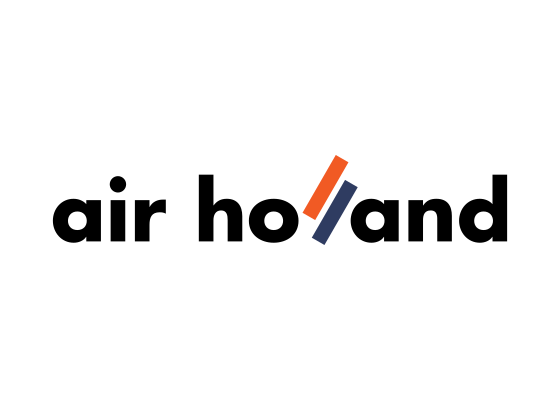
The Air Holland logo represented a Dutch airline that operated passenger and cargo charters to Africa, Asia, and the Mediterranean, as well as aircraft leasing, before ceasing operations in 2004.
The Air Holland wordmark was a text-based design combining deep slate blue (#2f3c61) with vibrant Dutch orange (#f15a24). The logotype featured bold, contemporary sans-serif letterforms with the airline name rendered in confident weights and clean geometry. The orange accent color, a signature of Dutch national identity, created immediate cultural connection while the blue provided professional stability. The design was straightforward and functional, appropriate for a charter and leasing operation focused on operational efficiency rather than consumer brand building.
Meaning and Symbolism
- Dutch orange: References the Netherlands’ national color, establishing immediate national identity and pride
- Slate blue: Provides professional credibility and suggests aviation’s traditional color associations
- Bold typography: Conveys strength, reliability, and operational capability
- Text-only approach: Reflects the practical, business-focused nature of charter and leasing operations
- Clean geometry: Suggests technical competence and efficient service
Design and History
Air Holland was headquartered in Oude Meer, Haarlemmermeer, and operated a specialized business model focused on charters and wet/dry leasing rather than scheduled passenger service. This operational focus influenced the logo design. Unlike consumer-facing airlines requiring emotional brand connections and lifestyle associations, Air Holland needed a mark that communicated professionalism, reliability, and Dutch heritage to corporate clients and partner airlines.
The choice of orange was both practical and symbolic. Orange is the Netherlands’ national color, associated with the House of Orange-Nassau and deeply embedded in Dutch cultural identity. For an airline named “Air Holland,” the orange accent created instant national recognition while differentiating the brand from the sea of blues dominating airline branding. The particular shade selected was vibrant and energetic, creating strong visibility without appearing garish.
The slate blue grounded the design with stability and professionalism. Rather than bright sky blue or corporate navy, Air Holland’s blue had a subtle gray undertone that felt modern and sophisticated. This color balance allowed the orange to pop as an accent while the blue carried the weight of corporate credibility. The text-based approach, without symbolic elements, reflected the airline’s B2B focus. Air Holland didn’t need to sell dreams of exotic destinations to consumers; it needed to project operational competence to airlines and charter clients seeking reliable capacity. The logo achieved this with clarity and Dutch pride until the airline ceased operations on March 25, 2004.
Typography
The Air Holland wordmark used a bold, geometric sans-serif typeface with strong, even stroke weights. The letterforms featured clean terminals and straightforward construction, ensuring excellent legibility across applications. The uppercase treatment reinforced the professional, authoritative character appropriate for commercial aviation operations.
FAQ
Q: Why is orange used in the Air Holland logo? A: Orange is the Netherlands’ national color, associated with the House of Orange-Nassau. Its use establishes immediate Dutch national identity while creating strong differentiation in airline branding.
Q: What type of operations did Air Holland conduct? A: Air Holland operated passenger and cargo charter flights to Africa, Asia, and the Mediterranean, as well as dry and wet leasing of aircraft to other airlines, rather than scheduled passenger service.
Q: When did Air Holland cease operations? A: Air Holland stopped flying on March 25, 2004, ending operations from its headquarters in Oude Meer, Haarlemmermeer in the Netherlands.
More logos with similar colors