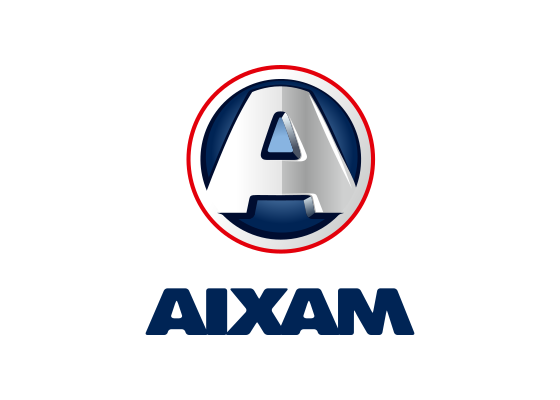
The Aixam logo represents a French microcar manufacturer based in Aix-les-Bains, specializing in license-free vehicles since 1983, now owned by American Polaris Industries.
The Aixam logo features a circular badge design incorporating navy blue, lighter blues, grays, red accents, and white in a structured composition. The circular format suggests automotive heritage while the color palette balances European sophistication with contemporary appeal. The navy blue dominates as the primary element, conveying reliability and maturity, while lighter blues and grays add dimension and depth. Red accents provide energy and visual interest, essential for a brand competing in the specialized microcar segment. The badge format creates a cohesive, self-contained mark that works effectively on small vehicle surfaces and marketing materials.
Meaning and Symbolism
- Navy Blue Foundation: Represents automotive credibility and European manufacturing heritage, establishing trust for vehicles that bridge transportation categories.
- Circular Badge Format: Connects Aixam to traditional automotive branding conventions while creating a distinctive, recognizable mark for the microcar niche.
- Gray and Light Blue Accents: Add sophistication and contemporary appeal, preventing the mark from feeling utilitarian despite the practical nature of license-free vehicles.
- Red Elements: Inject energy and passion, signaling that microcars can be exciting and desirable rather than merely functional transportation compromises.
Design and History
Aixam founded in 1983 following the acquisition of Arola, entering the specialized European microcar market serving drivers unable or unwilling to obtain standard driver’s licenses. These compact, limited-speed vehicles occupy a unique regulatory category in France and other European countries, requiring branding that could project automotive credibility while acknowledging the vehicles’ distinctive positioning.
The circular badge format aligned Aixam with traditional automotive marques while creating distinctive identity appropriate for non-traditional vehicles. For manufacturers selling microcars that legally qualify as different vehicle categories, visual identity must balance automotive associations with recognition of the product’s unique characteristics.
The complex color palette reflected Aixam’s evolution from small regional player to significant microcar manufacturer. As the company grew through the 1990s and 2000s, the sophisticated blues and grays supported expansion beyond basic transportation into lifestyle positioning for urban mobility, young drivers, and those seeking economical transportation.
Polaris Industries’ 2013 acquisition of Aixam-Mega brought American ownership to a distinctly European product category. The retention of Aixam’s established visual identity recognized the brand equity built over three decades serving specialized European markets where Polaris had limited recognition.
For vehicles sold primarily in France, Italy, and select European markets where license-free categories exist, the badge appears on compact bodies where every millimeter matters. The circular format maximizes brand presence while fitting efficiently on small fronts, sides, and rear panels.
Typography
When paired with the wordmark, the Aixam name typically appears in clean, contemporary sans-serif typography that balances European sophistication with approachability. The letterforms maintain clarity at the small sizes common in microcar badging while projecting sufficient presence for marketing materials.
FAQ
Q: What is a microcar? A: Microcars like Aixam’s offerings are small, lightweight vehicles with limited speed and power that can be driven in some European countries without standard driver’s licenses, occupying a specialized regulatory category.
Q: When did Polaris acquire Aixam? A: American powersports manufacturer Polaris Industries acquired Aixam-Mega from Axa Private Equity in April 2013, bringing the French microcar brand under American ownership.
Q: Where are Aixam vehicles sold? A: Aixam primarily operates in European markets where license-free vehicle categories exist, with particular strength in France, Italy, and other countries with favorable regulatory frameworks for microcars.
More logos with similar colors