The AC Ajaccio logo represents a French football club based in Ajaccio, Corsica, founded in 1910 and competing in Ligue 2 while maintaining fierce rivalry with fellow Corsican club Bastia.
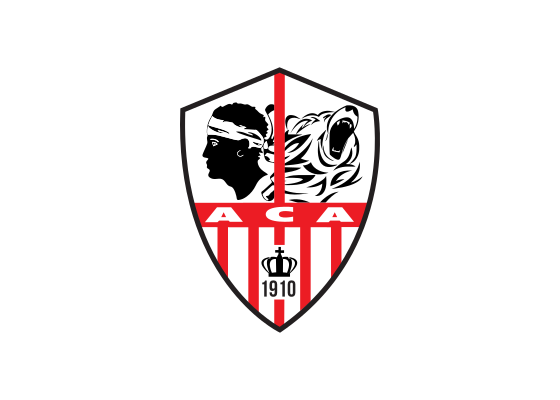
The AC Ajaccio badge employs a traditional shield format rendered in red, white, and black, creating a powerful, distinctive mark that represents Corsican football heritage. The shield shape connects to European football tradition while the specific design elements likely incorporate Corsican symbolism or references to Ajaccio’s coastal Mediterranean setting. The vibrant red dominates as the primary color, creating immediate recognition in French football while the black and white provide contrast and definition. The shield format works effectively on jerseys, scarves, and stadium displays where football crests must remain legible from distance.
Meaning and Symbolism
- Shield Format: Connects AC Ajaccio to European football heritage while providing a strong, defensive form appropriate for a club representing island identity and regional pride.
- Vibrant Red: Communicates passion, energy, and competitive spirit, essential for a club maintaining intense rivalry with Bastia in the Corsica derby.
- Black and White Accents: Provide contrast and structure, ensuring the badge remains distinct and legible across applications from match kits to marketing materials.
- Corsican Identity: The design elements likely reference the island’s culture, history, or geography, connecting the club to place and community.
Design and History
AC Ajaccio was founded in 1910, making it one of France’s historic clubs with over a century of Corsican football heritage. The badge needed to represent this longevity while remaining contemporary enough for modern football marketing and merchandising. The shield format achieved this balance, honoring traditional football aesthetics while allowing updates to specific design elements over the decades.
The club plays home matches at Stade François Coty, creating identity deeply connected to Ajaccio’s coastal capital setting. For an island club, the badge serves as ambassador of Corsican football to mainland France and European competitions, carrying responsibility to represent regional pride alongside sporting achievement.
The rivalry with Bastia defines much of AC Ajaccio’s identity, with the Corsica derby representing more than football competition. The distinctive red-dominated badge creates clear visual distinction from Bastia’s colors, ensuring instant recognition when the rivals meet in matches that captivate the island.
Operating primarily in Ligue 2 with occasional Ligue 1 promotions, AC Ajaccio needed branding appropriate for both second-tier professionalism and potential top-flight appearances. The classic shield format and bold colors provide sufficient gravitas for elite competition while maintaining recognition during periods in lower divisions.
For Corsican supporters, the badge represents more than a football club, embodying island identity, regional pride, and cultural distinctiveness within French football. This symbolic weight requires visual identity that honors tradition while remaining vibrant and competitive.
Typography
The badge typically incorporates the club initials “ACA” or full name “AC Ajaccio” in typography that balances traditional football lettering with contemporary clarity. The letterforms must remain legible when embroidered on jerseys, printed on scarves, and reproduced across merchandising where football crests face demanding reproduction requirements.
FAQ
Q: When was AC Ajaccio founded? A: AC Ajaccio was founded in 1910, giving the club over a century of history representing Corsican football in French leagues.
Q: What is the Corsica derby? A: The Corsica derby is the fierce rivalry between AC Ajaccio and Bastia, the island’s two professional clubs, representing more than football competition through connections to regional identity and local pride.
Q: Where does AC Ajaccio play? A: AC Ajaccio plays home matches at Stade François Coty in Ajaccio, Corsica’s capital city, competing primarily in Ligue 2 with periodic Ligue 1 promotions.
More logos with similar colors