Alemannia Aachen is a German football club from Aachen, North Rhine-Westphalia, founded in 1900 and nicknamed “the potato beetles” for their distinctive yellow-and-black striped jerseys.
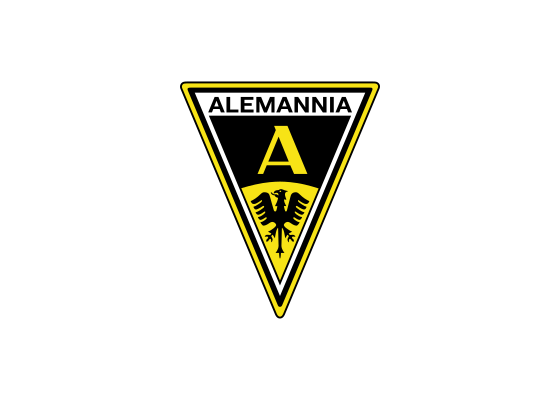
The Alemannia Aachen crest features bold black and yellow in a triangular composition that references both the club’s historic striped jerseys and the geometric efficiency of German design traditions. The design balances heraldic formality with the energetic color contrast that has defined the club’s visual identity since its founding in 1900. The triangle shape provides distinctive silhouette that stands out from the circular and shield formats dominating European football, while the yellow and black stripes create immediate association with the “potato beetle” nickname that connects the club to local culture and supporter tradition.
Meaning and Symbolism
- Black and yellow stripes: Reference the distinctive jerseys that earned Alemannia the “potato beetle” nickname, creating visual link between crest and on-pitch appearance.
- Triangular format: Provides distinctive shape that differentiates the crest within German football while suggesting stability, strength, and upward aspiration.
- Bold contrast: The high-contrast color scheme ensures visibility in stadium environments and creates energetic, attention-grabbing presence.
- Historic continuity: The design maintains elements recognizable to supporters across the club’s 120-year history, honoring tradition despite recent financial difficulties.
Design and History
Founded in 1900 as ATSV Alemannia, the club enjoyed periods of Bundesliga football in the late 1960s and a brief return in 2006-07 before financial troubles led to bankruptcy in 2012. The crest has maintained its core identity through these fluctuations, providing visual continuity for supporters who have experienced both top-flight success and fourth-tier regional football. The mark serves as reminder of the club’s heritage and aspirations, even during challenging periods competing in Regionalliga West.
The “potato beetle” nickname, derived from the resemblance between the striped jerseys and the distinctive insects, represents the kind of colorful local character that defines German football’s lower divisions. The crest incorporates this identity through the bold yellow and black stripes, turning what might seem an unflattering comparison into a source of pride and distinctive branding. This embrace of quirky local culture helps Alemannia maintain supporter loyalty despite the club’s fall from Bundesliga heights.
Playing in Aachen, a city near the borders with Belgium and the Netherlands, Alemannia operates in a region with complex cultural heritage. The club’s German identity and historic ambitions require visual branding that projects institutional permanence while acknowledging current reality competing in Germany’s fourth tier. The crest balances these requirements, honoring tradition while supporting the club’s efforts to rebuild toward higher divisions.
Typography
The Alemannia Aachen wordmark employs traditional letterforms that complement the crest’s bold geometric character. The typography emphasizes heritage and institutional presence, creating visual harmony with the triangular design. Letter spacing and stroke weights are calibrated for legibility across contexts, from supporter scarves to stadium signage. The formal typographic treatment reinforces the club’s long history and aspirations to return to higher levels of German football.
FAQ
Q: Why is Alemannia nicknamed the potato beetles? A: The nickname comes from the club’s distinctive yellow-and-black striped jerseys, which supporters felt resembled the coloring of potato beetle insects common in the region.
Q: Has Alemannia played in the Bundesliga? A: Yes, the club competed in Germany’s top division in the late 1960s and returned for a single season in 2006-07 before financial difficulties led to relegation and eventual bankruptcy.
Q: What happened during the 2012 bankruptcy? A: Alemannia entered bankruptcy in late 2012 but finished their third-division schedule before dropping to fourth-tier Regionalliga West in 2013-14, where they continue to compete.
More logos with similar colors