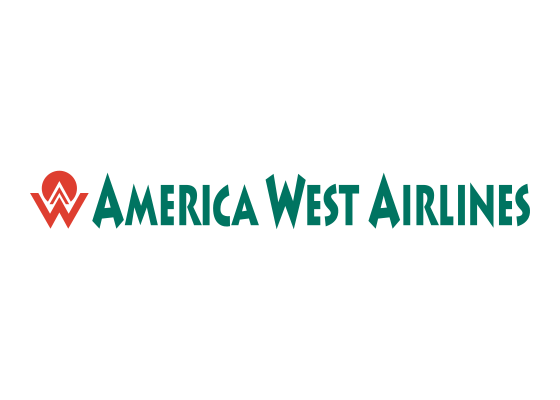
The America West logo represented a Tempe, Arizona-based airline operating from 1983 to 2005, using distinctive teal and red that captured Southwestern character while creating differentiation in competitive post-deregulation aviation markets.
The logo employed rich teal green as its primary color, immediately setting America West apart in airline markets where blues, reds, and traditional flag carrier colors dominated. The teal referenced the distinctive turquoise tones found in Southwestern jewelry, desert minerals, and the unique color palette of Arizona and Nevada landscapes surrounding the airline’s Phoenix and Las Vegas hubs. Red provided energetic accent and patriotic American connection, creating color pairing that felt both regionally authentic and nationally appropriate. The abstract mark suggested motion, Western geography, or stylized flight elements without literal aircraft depiction, allowing the identity to remain contemporary throughout the airline’s 22-year operation.
Meaning and Symbolism
- Teal Primary: Represented Southwestern regional authenticity, turquoise desert character, and Phoenix-based identity distinct from traditional aviation blues
- Red Contrast: Conveyed competitive energy, American airline heritage, and dynamic growth in expanding travel markets
- Abstract Treatment: Suggested forward progress, Western expansion narratives, and modern post-deregulation airline innovation
- Distinctive Palette: Created immediate visual recognition on tarmacs, in terminals, and across marketing materials
Design and History
The America West identity served an airline founded during the transformative post-deregulation period when new carriers could challenge established giants with fresh approaches to service, pricing, and branding. Launching service in 1983 from Phoenix Sky Harbor with secondary operations at Las Vegas McCarran, America West required visual identity that conveyed both regional authenticity and professional aviation standards. The teal and red solution accomplished both, creating memorable presence while maintaining credibility necessary for passengers trusting a new carrier with their safety.
The design reflected entrepreneurial optimism of deregulation era, when airlines could establish distinct personalities rather than conforming to conservative industry norms. The color choice proved strategically brilliant, creating Southwestern connection that resonated with hub city populations while remaining appropriate for service expansion to 100 cities across U.S., Canada, and Mexico. The teal particularly distinguished America West livery on crowded tarmacs where numerous airlines parked in proximity.
The abstract mark accommodated America West’s growth from startup to major carrier reaching $1 billion annual revenue by 1989. As the airline added aircraft, expanded route networks, established regional feed through America West Express, and developed international codeshare partnerships, the flexible identity scaled effectively without requiring redesign. The treatment worked across varied applications from Boeing 737 livery to airport signage to printed tickets and boarding passes.
When America West acquired the larger but financially troubled US Airways in 2005, the decision to adopt US Airways’ name and traditional red-white-blue branding ended the distinctive teal identity. This choice reflected practical realities of merging operations and leveraging US Airways’ stronger East Coast recognition, though it meant abandoning one of post-deregulation aviation’s most recognizable visual brands.
Typography
The America West wordmark employed contemporary sans-serif typography appropriate for modern airline branding. The letterforms likely balanced friendly approachability with professional aviation credibility, ensuring readability across livery scales, terminal signage, and customer-facing materials while maintaining the fresh, entrepreneurial character distinguishing post-deregulation carriers.
FAQ
Q: Why was teal green America West’s signature color? A: Teal created authentic Southwestern regional identity reflecting Arizona and Nevada desert landscapes while differentiating America West from blue-dominated competitors, establishing distinctive presence in post-deregulation airline markets.
Q: What distinguished America West operationally? A: America West held unique distinction as the only post-deregulation U.S. airline still operating under its original certificate when acquired, representing sustained independent operation from the competitive 1980s startup era.
Q: Why did the America West brand disappear after acquiring US Airways? A: Despite America West being the acquiring company in 2005, the merged carrier adopted the US Airways name and branding to leverage stronger East Coast market recognition, ending 22 years of the distinctive teal and red identity.
More logos with similar colors