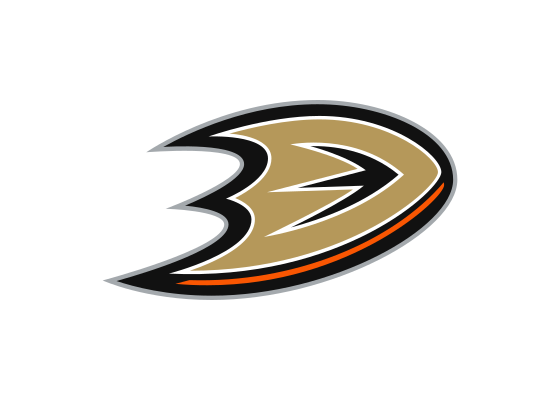
The Anaheim Ducks logo represents a National Hockey League franchise that evolved from Disney-owned novelty to legitimate championship contender through strategic rebranding centered on a stylized “D” that doubles as a duck’s webbed foot.
The current Anaheim Ducks primary mark features a bold “D” letterform rendered in metallic gold with orange and black outlines. The genius of the design lies in the letter’s construction: the left edge of the “D” forms the shape of a duck’s webbed foot, with three distinct toes pointing outward. This dual-purpose element creates a mark that functions as both typographic identifier and mascot reference. The gold, orange, and black color scheme projects sophistication and aggression, dramatically departing from the team’s original cartoon aesthetic.
Meaning and Symbolism
- Duck foot-shaped “D”: Maintains connection to the team name while transforming a literal duck mascot into abstract, mature athletic symbolism.
- Metallic gold: Conveys championship aspirations, success, and premium positioning within the NHL’s Pacific Division.
- Black and orange accents: The colors communicate power, determination, and the aggressive playing style that carried the team to its 2007 Stanley Cup championship.
- Sharp, angular construction: Reflects the speed, precision, and cutting action of hockey, contrasting with the rounded, playful forms of the earlier Disney-era identity.
Design and History
The Anaheim Ducks visual identity has undergone one of the most dramatic evolutions in professional sports branding. Founded in 1993 as the Mighty Ducks of Anaheim, the team’s original logo featured a cartoonish duck head wearing a goalie mask, rendered in jade, purple, silver, and white. This design directly referenced the Disney movie “The Mighty Ducks” and positioned the franchise as family entertainment rather than serious hockey competition. The duck head mask, while memorable and merchandising-friendly, limited the team’s credibility as the NHL expanded and matured.
The 2006 rebrand coincided with Disney selling the team and dropping “Mighty” from the name. The new identity introduced the webbed foot “D” concept alongside a complete color overhaul to gold, orange, and black. This transformation represented one of the most successful rebrands in sports history. The modified mark maintained just enough connection to prevent alienating existing fans while dramatically elevating the team’s visual sophistication. Importantly, the rebrand preceded the team’s 2007 Stanley Cup victory by one season, cementing the new identity’s association with championship success.
A 2010 refinement adjusted the gold tone from bright yellow to a more muted, metallic shade that read as premium rather than cartoonish. This subtle shift further distanced the identity from the Disney era. The 2013 update simplified the mark to just the standalone “D” without accompanying text, creating a cleaner, more iconic primary logo. This version has remained stable for over a decade, appearing on jerseys, the ice surface at Honda Center, and across digital platforms.
The team cleverly maintains its heritage by occasionally using throwback uniforms featuring the original jade and purple duck mask logo, allowing nostalgic fans to celebrate the Disney era while keeping the mature gold and black identity as the primary brand. This strategy acknowledges history without being constrained by it.
Typography
The Anaheim Ducks wordmark uses a custom athletic typeface with strong, angular letterforms that complement the aggressive geometry of the foot-shaped “D.” The sans-serif characters feature diagonal cuts and sharp terminals that suggest speed and forward motion. Letter spacing is tight, creating a compact, powerful composition. When the full “ANAHEIM DUCKS” wordmark appears, it typically sits above or below the primary “D” mark in a stacked configuration, with “ANAHEIM” rendered smaller than “DUCKS” to establish visual hierarchy and brand emphasis.
FAQ
Q: Why did the Ducks abandon their original cartoon logo? A: The Disney-era duck mask logo positioned the franchise as entertainment rather than serious competition. After Disney sold the team and it sought credibility as a championship contender, the cartoon aesthetic became a liability. The rebrand to gold and black coincided with increased competitive success, culminating in the 2007 Stanley Cup win.
Q: How does the current logo reference a duck without being cartoonish? A: The left edge of the “D” letterform is shaped like a duck’s webbed foot, with three distinct toes. This subtle integration allows the logo to maintain thematic connection to the team name while appearing sophisticated and athletic rather than mascot-driven.
Q: What makes the 2006 rebrand so successful? A: The rebrand maintained just enough continuity to preserve fan connection while dramatically elevating visual maturity. The timing proved perfect, as the new identity preceded the team’s first Stanley Cup by one season. The gold, orange, and black palette distinguished the Ducks within the NHL and created a bold, memorable presence that merchandises well and commands respect in competitive contexts.
More logos with similar colors