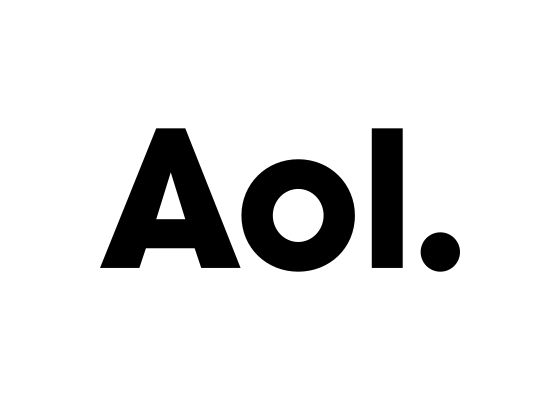
The AOL logo represents an American web portal and online service provider, now operating as a brand within Verizon Media.
The modern AOL identity, designed by Wolff Olins, features a bold typographic treatment with the distinctive “Aol.” stylization, including the lowercase letters and period that create a contemporary, conversational feel. The wordmark typically appears in black, projecting confidence and clarity while allowing the unconventional punctuation to create memorable distinction. The design moves dramatically away from AOL’s earlier triangle logo and various iterations, embracing a purely typographic approach that signals the company’s transformation from dial-up internet pioneer to modern media and content brand. The logo’s simplicity allows it to flex across diverse content types and digital platforms.
Meaning and Symbolism
- Lowercase with Period: Creates conversational, accessible feel while distinguishing the brand through unconventional punctuation treatment that sparks recognition and discussion.
- Black Monochrome: Provides professional authority and content neutrality, allowing AOL to serve as platform for diverse media properties without visual competition.
- Typographic Boldness: Conveys confidence and clarity, essential for a brand undergoing transformation from legacy internet provider to contemporary media company.
- Simplified Approach: Reflects modern digital design principles and the streamlined user experiences expected in contemporary web services.
Design and History
AOL’s journey from America Online, the dominant internet access provider of the 1990s, to a Verizon Media brand required significant identity evolution. Originally known for the ubiquitous AOL installation CDs that blanketed America and the distinctive triangle logo, the company needed rebranding that could distance itself from dial-up internet associations while maintaining the powerful three-letter acronym’s recognition.
Wolff Olins developed the “Aol.” treatment to position the company as contemporary, flexible, and focused on content and media rather than infrastructure. The lowercase styling and period punctuation created immediate differentiation while generating conversation and debate, valuable outcomes for a brand seeking renewed relevance. This typographic risk demonstrated confidence and willingness to evolve beyond nostalgic associations with internet history.
The move to pure typography eliminated the previous triangle symbol, acknowledging that geometric marks can feel dated as design trends evolve while strong wordmarks prove more enduring. The flexibility of the typographic approach allowed AOL to maintain consistent identity across increasingly diverse media properties, from news content to video platforms to email services, without the logo competing visually with varied content types.
As Verizon acquired AOL and integrated it into a larger media portfolio, the simple, bold wordmark proved adaptable to corporate restructuring. The logo works effectively as both standalone brand and component within Verizon Media’s architecture, demonstrating the strategic value of flexible, typography-based identity systems in corporate environments prone to merger and acquisition activity.
Typography
The Aol. wordmark employs a bold sans-serif typeface with strong, confident letterforms and the distinctive lowercase-with-period styling. The characters maintain generous proportions and clear construction, ensuring legibility across media applications from mobile screens to video overlays to email interfaces. The period functions as both grammatical mark and visual signature, creating a unique identifier that generates recognition beyond the three letters alone.
FAQ
Q: Why is AOL stylized as “Aol.” with lowercase letters and a period? A: Wolff Olins designed the distinctive lowercase-with-period treatment to create contemporary, conversational feel while generating memorable differentiation as AOL transitioned from internet access provider to modern media brand.
Q: When did AOL change its logo? A: The current Aol. identity represents a significant rebrand from earlier AOL iterations, developed as the company transformed from dial-up internet pioneer to content and media platform under Verizon ownership.
Q: What does AOL do now? A: Operating as a brand within Verizon Media, AOL functions as a web portal and online service provider offering email, news content, and various digital media services, distinct from its original identity as America Online dial-up internet access.