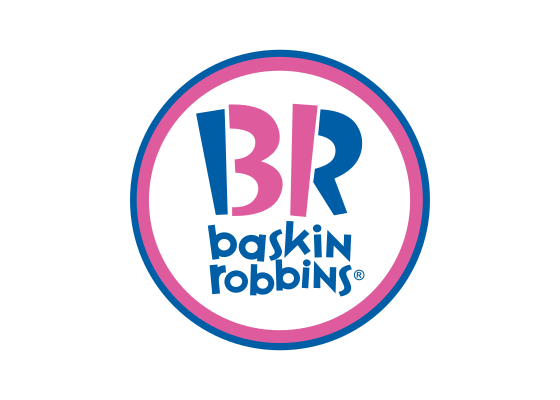
The Baskin-Robbins logo features a brilliant design innovation where the initials “BR” cleverly conceal the number “31” in pink, celebrating the brand’s famous promise of 31 flavors, one for each day of the month.
The 2005 logo redesign by Ogilvy & Mather transformed Baskin-Robbins from a traditional text-based identity into one of the most celebrated examples of hidden meaning in brand design. The blue “B” and “R” letterforms contain pink negative space that forms the numerals “3” and “1,” visible once you know to look for them. This visual puzzle creates a moment of discovery for customers, turning a static logo into an interactive experience. The dual-reading design reinforces the brand’s variety proposition in every touchpoint, from storefronts to ice cream containers.
The color palette of vibrant blue (#005ea6) and bright pink (#de5b9e) against white creates an energetic, playful atmosphere appropriate for an ice cream experience. These colors evoke both classic Americana and modern fun, allowing the brand to appeal across generations. The circular format suggests scoops of ice cream while providing a contained, friendly shape that works equally well on signage, packaging, and digital applications. The design’s simplicity ensures it reproduces clearly at any scale, from mobile apps to building-sized signs.
Meaning and Symbolism
- Hidden “31” Numerals: The pink negative space forming “31” within the blue “BR” letters reinforces the brand’s signature variety promise in a memorable, discovery-driven way that encourages closer examination.
- Blue and Pink Palette: The energetic color combination suggests fun, variety, and sweetness while maintaining legibility and creating strong shelf presence in competitive retail environments.
- Circular Container: The round format evokes ice cream scoops while creating a friendly, approachable shape that suggests community gathering places and shared experiences.
- Dual-Language Design: The logo communicates both the Baskin-Robbins name and the “31 flavors” concept simultaneously, maximizing message efficiency in limited space.
Design and History
When Burt Baskin and Irv Robbins, brothers-in-law who each owned separate ice cream shops, merged their businesses in 1945, they pioneered the variety concept that became their defining characteristic. The “31 flavors” marketing proposition, developed by Carson-Roberts advertising agency in 1953, promised customers a different flavor for every day of the month, revolutionary at a time when most ice cream shops offered fewer than ten options. This positioning required a logo that could instantly communicate abundance and choice.
For decades, Baskin-Robbins used various text-based logos that spelled out “31 Flavors” explicitly. The 2005 redesign marked a strategic shift toward visual storytelling and global scalability. By encoding the “31” concept within the initials rather than stating it outright, the logo transcended language barriers while creating a “did you notice?” moment that customers love to share. This approach has proven particularly effective in social media contexts, where the hidden number generates engagement and discussion.
The logo appears across more than 8,000 locations in nearly 50 countries, making it one of the world’s most recognized ice cream identities. The design’s flexibility allows it to anchor a broader visual system that accommodates seasonal promotions, flavor launches, and regional adaptations while maintaining instant brand recognition.
Typography
The Baskin-Robbins “BR” employs a bold, geometric sans-serif typeface with substantial weight and minimal stroke variation, ensuring clarity and impact. The letterforms feature slightly rounded corners that soften the geometric structure, making the logo feel friendly rather than corporate. The tight integration of the two letters, necessary for the “31” illusion to function, creates a unified monogram rather than separate initials. Below the circular emblem, the full “Baskin-Robbins” name typically appears in a complementary sans-serif font that balances readability with personality, often set in all capitals for maximum impact.
FAQ
Q: When was the hidden “31” logo introduced?
A: The current logo featuring the hidden “31” within the “BR” initials was introduced in 2005 as part of a brand refresh led by Ogilvy & Mather, replacing earlier text-based designs that explicitly spelled out “31 Flavors.”
Q: Does Baskin-Robbins still offer exactly 31 flavors?
A: While the brand has introduced over 1,300 flavors since 1945, stores typically display 31 flavors at any given time, rotating seasonal and regional varieties to maintain the original promise of 31 options while providing ongoing novelty.
Q: Why did Baskin-Robbins choose to hide the “31” instead of displaying it prominently?
A: Encoding the “31” within the initials creates a memorable discovery moment that engages customers and generates word-of-mouth discussion. The hidden element also allows the logo to transcend language barriers, communicating the variety concept visually in international markets.
More logos with similar colors