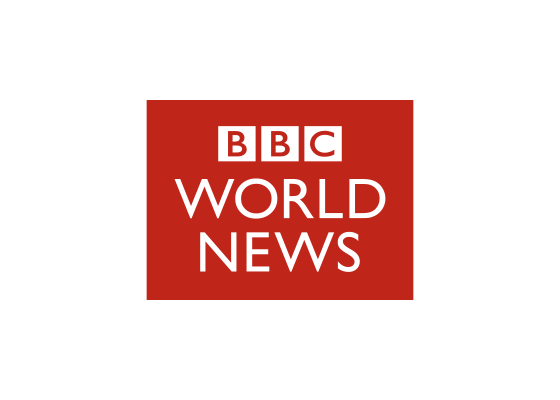
The BBC World Service logo extends the iconic BBC branding to represent the world’s largest international broadcaster, reaching audiences in over 40 languages.
The rectangular wordmark places “BBC WORLD SERVICE” in white Gill Sans typography against a bold red background (#c0311a). This design follows the established BBC visual identity system, using the corporation’s signature color and typeface while adding “WORLD SERVICE” to distinguish this international division from domestic broadcasting. The three-line stacked arrangement creates a compact, recognizable block that works equally well on radio interfaces, digital platforms, and promotional materials across dozens of countries.
Meaning and Symbolism
- BBC Red: Carries forward the corporation’s heritage color, symbolizing authority and trust in journalism.
- White Typography: Ensures maximum legibility across global markets and various media formats.
- Stacked Layout: Creates a self-contained unit that maintains integrity at any scale.
- Gill Sans Typeface: Represents British design heritage while offering clean, modern readability.
Design and History
The BBC World Service logo builds directly on the parent corporation’s visual identity, which has used variations of red and white with Gill Sans typography since the 1950s. When the World Service needed distinct branding to represent its international mission, designers extended the familiar BBC blocks to accommodate the additional words while preserving instant recognition of the BBC name.
The Gill Sans typeface, created by Eric Gill in the late 1920s, became intrinsically linked with BBC identity decades before the World Service expanded globally. Its humanist proportions and clean geometry made it ideal for both the technical constraints of early broadcasting and the cultural diplomacy mission of international radio. The typeface’s British origins subtly reinforced the service’s identity as the United Kingdom’s voice to the world.
The bold red background creates immediate visual impact in crowded media environments, from shortwave radio dials to modern streaming platforms. This same red appears consistently across all BBC properties, creating a family relationship between domestic and international services. The decision to use a solid color block rather than outline or transparent treatments ensures the logo reproduces reliably across the World Service’s vast technological infrastructure, from analog transmission to digital apps.
As the World Service expanded from primarily radio into television, podcasts, and digital streaming, the logo’s rectangular format adapted seamlessly. The proportions work as both horizontal and square crops depending on platform requirements, demonstrating the versatility of the original design thinking.
Typography
Gill Sans remains one of the most enduring choices in broadcast identity, combining geometric structure with subtle humanist warmth. The letterforms feature consistent stroke weights and generous apertures that maintain clarity even in challenging conditions, whether heard on crackling shortwave frequencies or seen on small mobile screens. The all-caps treatment reinforces authority and ensures consistent visual rhythm across the three-line layout.
FAQ
Q: Why does BBC World Service use the same red as other BBC services? A: The consistent red (#c0311a) creates a visual family across all BBC properties, leveraging decades of trust and recognition while the added “WORLD SERVICE” text differentiates the international offering.
Q: When did the BBC World Service adopt this logo design? A: While the BBC has used variations of red blocks with Gill Sans since the 1950s, the specific “BBC WORLD SERVICE” configuration evolved as the international service expanded its brand presence beyond radio into multimedia platforms.
Q: How many languages does the BBC World Service logo appear in? A: The English-language logo serves as the primary identifier, but the World Service broadcasts in more than 40 languages, with localized branding variations that maintain the red and white color scheme while adapting text to regional scripts and languages.
More logos with similar colors