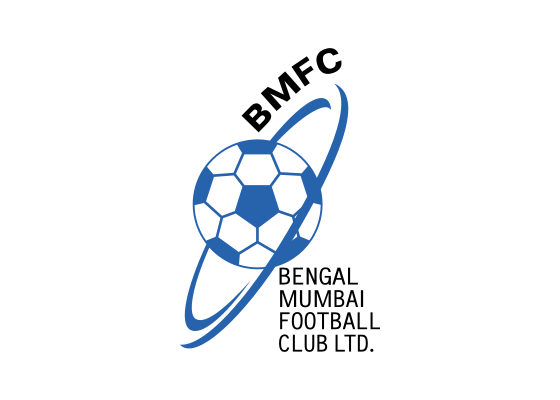
The Bengal Mumbai FC emblem represented an Indian professional football club based in Mumbai that competed in the National Football League II and MDFA Elite League from 1998 until its dissolution in 2011.
The abstract logo featured a dynamic design in rich royal blue (#2762ac) and white, creating a modern interpretation of football club branding that distinguished it from traditional circular crests. The abstract geometric elements suggested movement and energy, reflecting the club’s identity as India’s second professionally founded football organization and the first in Mumbai. The bold blue color provided strong visibility on white kits while establishing a confident, contemporary presence that aligned with the club’s pioneering status in Indian professional football.
Meaning and Symbolism
- Royal Blue: Represented professionalism, ambition, and the club’s status as a trailblazer in Mumbai football.
- Abstract Form: Symbolized modernity and the club’s role in advancing professional football culture in India.
- White Contrast: Ensured legibility and created clean visual separation on match kits and promotional materials.
- Dynamic Geometry: Conveyed movement, energy, and the competitive spirit of football.
Design and History
Bengal Mumbai FC emerged in 1998 as a significant development in Indian football professionalization. As the first professionally structured club in Mumbai and only the second in India, the organization brought new standards to the sport’s infrastructure and branding. The logo design reflected this forward-thinking approach by eschewing traditional heraldic or circular badge formats in favor of a more abstract, contemporary visual identity.
The choice of abstract geometry rather than pictorial elements like tigers, shields, or location-specific imagery distinguished Bengal Mumbai from clubs relying on conventional sports symbolism. This design decision positioned the club as progressive and modern, appealing to urban audiences in India’s commercial capital. The blue and white palette provided sufficient contrast for visibility while avoiding overly complex color combinations that could complicate kit design and merchandise production.
During its 13-year existence, Bengal Mumbai competed in the National Football League II and participated in the MDFA Elite League, representing Mumbai in domestic football competitions. The club’s branding maintained consistency throughout this period, building recognition despite the challenging landscape of Indian football in the early 2000s. The abstract logo design allowed for flexible application across various media, from match programs to signage at Mumbai’s football venues.
The club’s dissolution in 2011 reflected the broader challenges facing professional football clubs in India during a transitional period for the sport. However, the legacy of clubs like Bengal Mumbai contributed to the eventual establishment of more structured leagues and professional operations that would follow in Indian football’s development.
Typography
If text appeared in the logo, it likely employed a modern sans-serif typeface that complemented the abstract geometric elements. The typography would have prioritized clarity and contemporary appeal, ensuring the club name remained legible when reproduced at various scales on jerseys, tickets, and promotional materials throughout Mumbai’s football venues.
FAQ
Q: Why was Bengal Mumbai FC significant in Indian football? A: Bengal Mumbai FC was the second professionally founded football club in India and the first in Mumbai, pioneering professional club structures and bringing new standards to Indian football organization when it was established in 1998.
Q: What leagues did Bengal Mumbai FC compete in? A: The club competed in the National Football League II, which was a division of India’s national league system, alongside participation in the MDFA Elite League, a prominent Mumbai-based football competition.
Q: Why did the club choose an abstract logo instead of a traditional crest? A: The abstract design reflected the club’s modern, professional approach and distinguished it from traditional football club branding, positioning Bengal Mumbai as a forward-thinking organization in India’s evolving football landscape.
More logos with similar colors