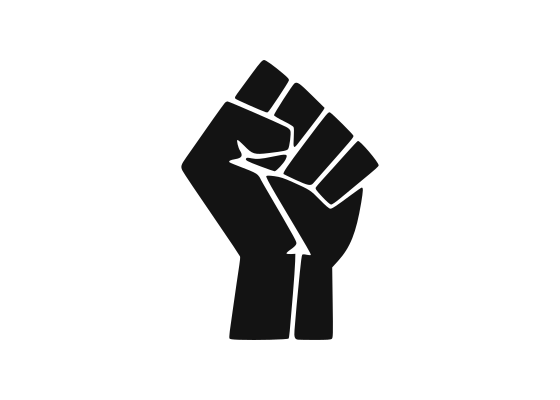
The raised Black fist is a universal symbol of solidarity, resistance, and Black Power that emerged from civil rights and liberation movements, representing unity, strength, and the demand for racial justice and self-determination.
The clenched fist raised vertically became the signature gesture of the Black Power movement in the 1960s, most famously displayed by Tommie Smith and John Carlos at the 1968 Olympics. The symbol transcends its American origins, appearing in liberation movements worldwide as a representation of collective strength against oppression.
Meaning and Symbolism
- The raised fist represents unified resistance, with individual fingers joining together to create collective power stronger than any individual
- Black color emphasizes racial pride and the specific struggle for Black liberation, distinguishing the symbol from generic protest imagery
- The vertical upward thrust suggests defiance, determination, and refusal to submit to systemic oppression
- Clenched fingers convey controlled strength and disciplined organization rather than chaotic violence
- The symbol’s simplicity enables reproduction across media from protest signs to t-shirts to social media avatars
History and Evolution
The raised fist symbol has roots in labor movements and communist organizing, but became specifically associated with Black Power in the mid-1960s as activists including Stokely Carmichael, Malcolm X, and the Black Panther Party sought more immediate, confrontational approaches to achieving racial justice. The movement emerged from frustration with the slow progress of non-violent civil rights tactics, particularly after Malcolm X’s 1965 assassination and urban riots in 1964 and 1965 revealed the limitations of peaceful protest in addressing economic inequality and police violence.
The Black Panther Party, founded in 1966, adopted the raised fist as its signature symbol alongside the iconic black beret. The party’s philosophy combined Black nationalism, socialism, and community self-defense, establishing free breakfast programs, health clinics, and educational initiatives in underserved Black neighborhoods. This practical organizing distinguished Black Power from purely symbolic protest, creating infrastructure for self-sufficiency unavailable within redlined communities.
The 1968 Olympics provided global visibility when American sprinters Tommie Smith and John Carlos raised gloved fists during the medal ceremony, resulting in their expulsion from the games but cementing the gesture’s iconic status. The symbol’s international influence included the Black Power Revolution in Trinidad and Tobago, and adoption by liberation movements across Africa and the Caribbean during decolonization.
In contemporary movements, the raised Black fist experienced resurgence during Black Lives Matter protests beginning in 2013 and intensifying after George Floyd’s murder in 2020. The symbol maintained continuity with 1960s struggles while adapting to new contexts including social media, where the fist appears in profile pictures, hashtags, and digital art. The gesture’s enduring power lies in its clear communication of resistance, solidarity, and the ongoing nature of Black liberation struggle.
Typography and Design
When rendered graphically, the raised fist typically appears in solid black silhouette, maximizing contrast and recognition. The simplified form removes individual details like fingerprints or knuckles, creating an archetypal representation of collective action rather than individual identity. This abstraction enables the symbol to represent all Black people rather than specific individuals.
The fist is usually shown from the side in clear profile, with the thumb wrapped across the fingers in anatomically correct position. The wrist and forearm extend downward, anchoring the gesture. The vertical orientation and upward thrust are essential elements, distinguishing the symbol from other fist gestures with different meanings.
Frequently Asked Questions
Who designed the Black fist symbol? The raised fist emerged organically from multiple liberation movements rather than being designed by a specific individual, though it became most associated with Black Power activists and the Black Panther Party in the 1960s.
When was the Black fist logo last updated? As a symbol of resistance and solidarity, the raised fist has remained visually consistent since its popularization in the 1960s, with its meaning and application evolving across different social justice movements.
What do the colors in the Black fist logo represent? The solid black silhouette emphasizes racial identity, pride in Blackness, and the specific struggle for Black liberation, while the stark contrast ensures immediate recognition across media from protest signs to digital platforms.