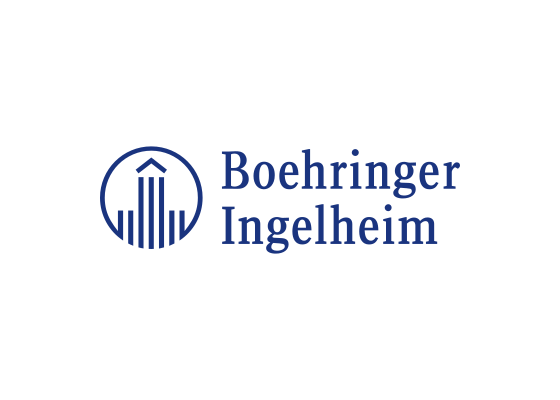
The Boehringer Ingelheim logo features a stylized triple-arch motif inspired by Charlemagne’s imperial palace, representing the German pharmaceutical company’s 138-year heritage as the world’s largest family-owned pharmaceutical manufacturer.
The Boehringer Ingelheim logo centers on a distinctive architectural symbol composed of three connected arches rendered in deep royal blue. This graphic element references the central section of Charlemagne’s imperial palace in Ingelheim, the German town where Albert Boehringer founded the company in 1885. The triple-arch structure creates stability and continuity while the historical reference links the company to over a thousand years of German cultural heritage. The deep blue color conveys trust, scientific authority, and the medical professionalism essential in pharmaceutical branding. The arches’ rounded forms provide warmth and approachability that balance the formality of pharmaceutical industry conventions.
The wordmark uses a clean, contemporary sans-serif typeface positioned alongside or below the arch symbol. The long company name requires careful typographic treatment to maintain legibility at small sizes on pharmaceutical packaging and medical literature. The typography’s straightforward character allows the distinctive arch symbol to carry primary brand recognition while ensuring clear identification across regulatory documents, scientific publications, and corporate communications. The combination of historical architectural reference and modern typography creates identity that honors pharmaceutical tradition while projecting continued innovation and research leadership.
Meaning and Symbolism
- Triple Arch: References Charlemagne’s palace in Ingelheim, connecting the company to over a millennium of German heritage and suggesting the enduring stability of family ownership spanning five generations.
- Royal Blue Color: Conveys medical trust, scientific excellence, and the professional authority earned through 138 years of pharmaceutical innovation and quality manufacturing.
- Architectural Form: Symbolizes solid foundations and structural integrity, reflecting both the company’s research infrastructure and family ownership’s long-term stability.
- Historical Reference: Distinguishes Boehringer Ingelheim from competitors while emphasizing German pharmaceutical industry’s reputation for precision, quality, and scientific rigor.
Design and History
Albert Boehringer founded the company in 1885 in Ingelheim am Rhein, establishing a pharmaceutical operation that would remain under family control for over a century. The choice of Ingelheim proved significant beyond convenient manufacturing location. The town housed ruins of Charlemagne’s imperial palace, one of the most important centers of power in medieval Europe. Boehringer chose the palace’s distinctive triple-arch structure as the company symbol, creating visual identity rooted in local history and German cultural heritage. This architectural reference provided gravitas and historical depth unusual in pharmaceutical branding.
Boehringer Ingelheim remained privately held through five generations of family ownership, providing strategic stability that allowed long-term research investments not always possible at publicly traded pharmaceutical companies answerable to quarterly earnings expectations. This ownership structure enabled the company to pursue research in complex therapeutic areas requiring sustained investment before generating returns. The family control also facilitated major acquisitions including significant animal health operations, building Boehringer Ingelheim into one of the world’s top ten pharmaceutical companies by revenue despite remaining private.
The company developed particular strength in respiratory diseases, metabolism disorders, immunology, oncology, and central nervous system conditions. Boehringer Ingelheim’s respiratory portfolio includes treatments for chronic obstructive pulmonary disease and asthma that serve millions of patients worldwide. The company also built significant animal health operations, ranking among the top three global animal health companies. This dual focus on human and animal health created portfolio diversification while leveraging shared pharmaceutical development capabilities and manufacturing infrastructure.
The architectural logo served Boehringer Ingelheim through over a century of pharmaceutical industry evolution, from small-molecule chemical drugs through biotechnology revolution. The symbol’s abstract character allowed it to work across diverse therapeutic areas and product types without becoming dated or category-specific. The historical reference provided continuity through corporate evolution while German associations reinforced pharmaceutical quality perceptions. The triple-arch symbol became one of pharmaceutical industry’s most recognizable marks despite Boehringer Ingelheim operating with lower public profile than publicly traded competitors more visible through stock market reporting and investor relations.
Typography
The Boehringer Ingelheim wordmark employs a clean, professional sans-serif typeface with excellent legibility despite the long company name requiring careful spacing and sizing considerations. The letterforms feature consistent stroke weights and generous proportions that ensure clarity across diverse applications from pharmaceutical packaging to building signage to digital interfaces. The typography maintains German design sensibilities of precision and functionality while avoiding excessive personality that might distract from the distinctive architectural symbol. The straightforward treatment allows the mark to carry brand recognition and emotional connection while text provides necessary identification in regulated pharmaceutical contexts.
FAQ
Q: What does the Boehringer Ingelheim logo symbol represent? A: The triple-arch symbol references the architectural structure of Charlemagne’s imperial palace in Ingelheim, Germany, the town where Albert Boehringer founded the company in 1885. This historical reference connects the pharmaceutical company to over a millennium of German cultural heritage.
Q: Is Boehringer Ingelheim publicly traded? A: No, Boehringer Ingelheim remains privately held and fully owned by the Boehringer, Liebrecht, and von Baumbach families after five generations. This makes it the world’s largest family-owned pharmaceutical company and one of the largest private companies of any kind.
Q: What therapeutic areas does Boehringer Ingelheim focus on? A: The company focuses primarily on respiratory diseases, metabolic disorders including diabetes, immunology, oncology, and central nervous system conditions for human health, plus significant animal health operations that rank among the top three globally in veterinary pharmaceuticals.