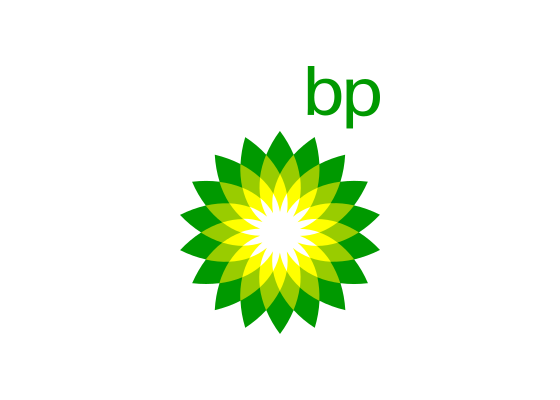
The BP logo features a green and yellow sunburst symbol called the “Helios” mark, introduced in 2000 to represent the company’s shift toward renewable energy and environmental responsibility.
The BP identity underwent a dramatic transformation in 2000 when the company rebranded from “British Petroleum” to simply “BP” with the tagline “Beyond Petroleum.” The new logo replaced the traditional green shield with a radiating sunburst pattern composed of overlapping green, yellow, and white segments. The Helios mark (named after the Greek sun god) was designed by Landor Associates to symbolize energy, warmth, and the sun as a source of power. The geometric composition creates a sense of movement and dynamism through its pinwheel-like arrangement of segments.
The color palette shifted dramatically from traditional petroleum industry blues and reds to bright greens and yellows, signaling BP’s stated commitment to renewable energy and sustainable practices. The logo’s organic, flower-like form contrasts sharply with the rigid, heraldic emblems used by most oil companies. The mark functions well as a standalone symbol, allowing BP to drop the company name from many applications and rely on the sunburst alone for recognition.
Meaning and Symbolism
- Sunburst pattern: The radiating segments reference solar energy, natural power, and the company’s stated pivot toward renewable energy sources beyond petroleum.
- Green and yellow palette: Green suggests environmental responsibility and sustainability, while yellow evokes sunlight, optimism, and energy.
- Helios reference: Named after the Greek god of the sun, the mark connects ancient solar mythology with modern energy concerns.
- Pinwheel motion: The overlapping segments create a sense of rotation and forward momentum, suggesting innovation and transformation.
Design and History
BP traces its origins to the Anglo-Persian Oil Company, founded in 1909 following oil discoveries in Iran. The company became British Petroleum in 1954 and was commonly known as BP for decades before formally adopting the shortened name in 2000. The rebrand was one of the most ambitious corporate identity overhauls in history, coinciding with CEO John Browne’s public acknowledgment of climate change and commitment to renewable energy investment.
Landor Associates designed the Helios mark to break dramatically from petroleum industry visual conventions. The sunburst replaced BP’s previous shield logo, which had been in use since 1989 with only minor variations. The 2000 rebrand included not just the logo change but a comprehensive repositioning, new advertising campaigns, and significant investments in solar and wind power. The “Beyond Petroleum” tagline (later retired) signaled the company’s stated ambition to diversify beyond fossil fuels.
The logo’s reception was mixed. Environmentalists questioned whether the identity shift reflected genuine commitment or greenwashing, particularly after BP’s continued heavy investment in oil extraction and the 2010 Deepwater Horizon disaster. From a design perspective, however, the Helios mark succeeded in differentiating BP visually from its competitors and creating a memorable, ownable symbol that works across global markets.
Typography
The BP wordmark uses Univers, a neo-grotesque sans-serif typeface designed by Adrian Frutiger in 1957. The letterforms are clean, rational, and highly legible, reflecting Swiss modernist design principles. BP typically uses Univers in lowercase, which softens the brand expression and makes it feel more approachable. The typeface pairs well with the organic curves of the Helios symbol while maintaining clear readability across applications.
FAQ
Q: What does the BP sunburst symbol mean?
A: The Helios mark represents solar energy and the company’s stated commitment to renewable energy and environmental responsibility, introduced during the 2000 “Beyond Petroleum” rebrand.
Q: When did BP change its logo?
A: The current Helios sunburst logo was introduced in 2000 as part of a major rebrand that shortened the company name from “British Petroleum” to “BP.”
Q: Why did BP choose green and yellow?
A: The colors signal environmental consciousness and renewable energy, departing from traditional petroleum industry blue-and-red palettes to emphasize sustainability goals.
More logos with similar colors