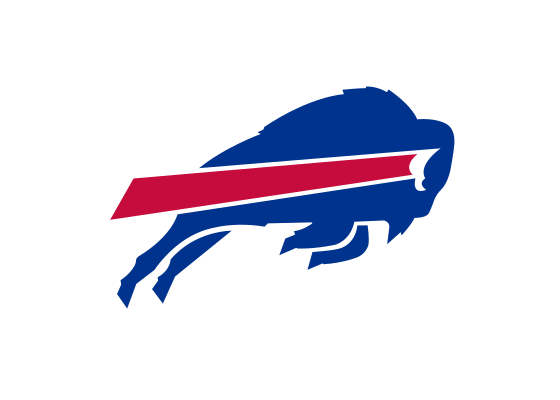
The Buffalo Bills logo features a charging buffalo rendered in royal blue and red, representing power, determination, and the team’s namesake connection to Buffalo Bill Cody and the American frontier spirit.
The Buffalo Bills identity centers on a simplified buffalo silhouette in profile, designed to communicate forward momentum and unstoppable force. The mark uses royal blue as the primary color with red accents, creating a bold, patriotic palette that stands out in the NFL’s crowded visual landscape. The buffalo’s aggressive stance, with head lowered and legs positioned for charging, conveys competitive intensity and physical dominance. Clean lines and minimal detail ensure the logo reproduces effectively from helmet applications to digital platforms, maintaining instant recognition at any scale.
The design balances realistic buffalo anatomy with graphic simplification necessary for sports branding. The animal’s distinctive profile, powerful shoulders, and lowered head position are immediately recognizable while the stylized treatment removes extraneous detail. A red stripe accent running through the design adds visual interest and reinforces the team’s color scheme without overwhelming the primary blue form.
Meaning and Symbolism
- Charging buffalo: Represents unstoppable power, determination, and the physical dominance required in professional football
- Royal blue: Creates strong visual identity that distinguishes the Bills while projecting confidence and authority
- Red accent stripe: Adds energy and references American patriotism, connecting to Buffalo Bill Cody’s frontier heritage
- Forward-facing stance: Communicates aggression, momentum, and competitive drive toward victory
Design and History
The Buffalo Bills joined the American Football League in 1960, with the team name chosen through a fan contest. The name references both the city of Buffalo and Buffalo Bill Cody, the legendary American frontier figure and showman. This dual meaning provided rich symbolic territory for logo development, connecting local pride with broader American frontier mythology.
The current logo design emerged from evolution through several iterations, with the charging buffalo becoming the central symbol in the 1970s. The royal blue and red color scheme was refined to create maximum visual impact and distinguish the Bills from other blue-based NFL teams. The simplified, aggressive rendering reflects design trends toward cleaner sports identities that work across modern media platforms.
The logo has undergone periodic refinements to optimize technical performance while maintaining core recognition. These updates addressed reproduction challenges across various materials and scales, from embroidered uniforms to massive stadium graphics. The consistent buffalo symbol has built strong brand equity over decades, making it synonymous with Buffalo sports culture and the team’s passionate fan base.
Typography
The Buffalo Bills wordmark uses bold, strong typography with thick strokes that complement the powerful buffalo symbol. The letterforms feature confident geometry and substantial visual weight that projects strength and durability. The typeface maintains excellent legibility across all applications while creating unified brand identity with the charging buffalo mark.
FAQ
Q: Why are they called the Buffalo Bills? A: The name was chosen through a 1947 fan contest and references both the city of Buffalo and Buffalo Bill Cody, the famous American frontier scout and Wild West showman, connecting local identity with frontier heritage.
Q: What do the Bills’ colors represent? A: Royal blue and red create a bold, patriotic palette that distinguishes the team in the NFL while suggesting confidence, authority, and American frontier spirit connected to the team’s namesake.
Q: When was the current Bills logo introduced? A: The charging buffalo design has been the team’s primary symbol since the 1970s, with periodic refinements to optimize reproduction and maintain relevance across evolving media platforms and uniform applications.
More logos with similar colors