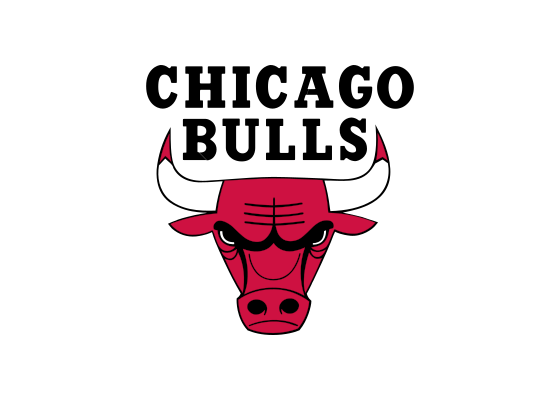
The Chicago Bulls logo is one of the most recognizable symbols in sports history, featuring an aggressive bull’s face rendered in bold red against white. This iconic design has remained virtually unchanged since 1966, becoming synonymous with basketball excellence and championship dynasties.
The logo depicts a snorting bull with flared nostrils, sharp horns, and an intense forward-facing expression that communicates raw power and determination. The simplified geometric forms create a mark that works at any scale, from tiny mobile screens to massive arena signage. The bull’s aggressive posture and the dynamic negative space between the horns give the logo an unforgettable character. Red and white create maximum contrast, ensuring visibility and making the mark instantly recognizable even without the team name.
What makes this logo particularly brilliant is its dual reading as both a bull’s face and, when inverted, a robot reading a book. This hidden detail has become legendary among design enthusiasts, though it was likely unintentional. The logo’s staying power through decades of trend cycles proves that timeless design doesn’t require complexity, just clarity of concept and confident execution. The Bulls logo has transcended sports to become a cultural icon, appearing in fashion, street art, and global popular culture.
Meaning and Symbolism
- Bull imagery represents raw power, determination, and the aggressive competitiveness of Chicago basketball
- Red color communicates passion, intensity, energy, and the fierce competitive spirit of championship teams
- Forward-facing position suggests confrontation, directness, and the team’s fearless approach to competition
- Sharp horns and flared nostrils emphasize strength, danger, and dominance on the court
- Geometric simplicity creates versatility and ensures the mark remains impactful across all media and generations
Design and History
Dean Wessel created the Bulls logo in 1966 when the franchise was established, and it has required no significant changes in nearly six decades. This remarkable consistency is rare in professional sports, where teams frequently rebrand to stay current. The logo’s staying power is testament to its fundamental strength as a piece of graphic design: it’s simple, memorable, appropriate, and distinctive.
The logo became globally iconic during the Michael Jordan era of the 1990s, when the Bulls won six championships and merchandise featuring the logo sold worldwide. The design’s simplicity translated perfectly across cultures and languages, helping build the NBA’s international presence. Unlike more complex logos that date themselves, the Bulls mark feels equally relevant today as it did in 1966, proving that great design truly is timeless.
Typography
When the Bulls logo appears with the team name, it typically uses a bold, condensed sans-serif typeface that complements the logo’s geometric character. The typography doesn’t compete with the iconic bull mark but provides necessary information with appropriate weight and presence. The letterforms are sturdy and athletic without resorting to clichéd sports typography conventions.
FAQ
Q: Has the Chicago Bulls logo ever been redesigned? A: The core logo has remained essentially unchanged since 1966, with only minor refinements for better reproduction. This consistency is intentional and has helped build extraordinary brand equity.
Q: Who designed the Bulls logo? A: Commercial artist Dean Wessel created the logo in 1966. His design has become one of the most successful and enduring logos in sports history.
Q: Is it true the logo looks like a robot reading when turned upside down? A: Yes, when inverted, the negative space and forms can be interpreted as a robot reading a book. While this reading is unintentional, it has become part of the logo’s legend and demonstrates the power of simple geometric forms.
More logos with similar colors