The Coca-Cola Company Logos
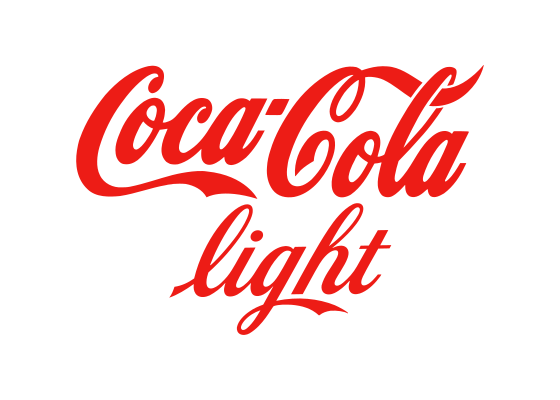
Coca-Cola Light uses the iconic red Spencerian script to deliver zero-calorie refreshment in international markets, maintaining Coca-Cola’s visual equity while clearly communicating its diet positioning.
Meaning and Symbolism
- The signature red maintains immediate visual connection to flagship Coca-Cola, leveraging over a century of brand equity and consumer recognition.
- The “Light” designation communicates the product’s zero-calorie positioning in markets outside North America, where Diet Coke branding dominates.
- The Spencerian script typography provides continuity with Coca-Cola’s heritage, suggesting authentic cola taste despite reduced calories.
- The red-on-white or white-on-red contrast ensures exceptional shelf visibility in competitive beverage refrigerators and retail environments.
History and Evolution
Coca-Cola Light launched as the company’s international counterpart to Diet Coke, which debuted in the United States in 1982. While North American markets embraced the “Diet Coke” brand name and distinct identity, international markets received “Coca-Cola Light,” maintaining closer visual alignment with the flagship Coca-Cola brand. This strategic decision recognized that consumer attitudes toward diet products and brand naming preferences vary significantly across cultures and regions.
The Coca-Cola Company discovered that the word “diet” carried different connotations globally. In many markets, “light” better communicated the product’s positioning as a reduced-calorie option without the medicinal or restrictive associations that “diet” suggested. This localization strategy allowed Coca-Cola to optimize brand acceptance while maintaining the cola taste profile and zero-calorie formulation that appealed to health-conscious consumers worldwide.
Coca-Cola Light’s visual identity deliberately stays close to flagship Coca-Cola branding, using the same Spencerian script and red color that have defined the brand since the late 19th century. This approach differs from Diet Coke’s more distinct silver-and-red palette, reflecting strategic differences in how the brands position themselves relative to original Coca-Cola. The Light variant emphasizes continuity and authentic cola heritage, while Diet Coke established independent brand personality.
Typography and Design
Coca-Cola Light employs the legendary Spencerian script that has defined Coca-Cola since 1886, when bookkeeper Frank Mason Robinson designed the original logotype. This flowing, ornate handwriting style was popular in American business correspondence during the Victorian era, and Coca-Cola’s preservation of this typography through 135+ years has made it arguably the world’s most recognized script.
The red color provides instant category recognition and appetite appeal essential for beverage marketing. Coca-Cola’s proprietary red has remained remarkably consistent across decades and global markets, becoming a distinctive brand asset as recognizable as the script itself. The “Light” modifier integrates seamlessly into the established typographic system, maintaining visual harmony while clearly communicating the product variant. This design strategy enables Coca-Cola Light to benefit from the massive brand equity of original Coca-Cola while serving international consumers seeking zero-calorie options with authentic cola taste.
Frequently Asked Questions
Who designed the Coca-Cola Light logo?
Coca-Cola Light uses the Spencerian script originally created by Coca-Cola bookkeeper Frank Mason Robinson in 1886, with the “Light” modifier integrated by The Coca-Cola Company’s internal design teams for international markets.
When was the Coca-Cola Light logo last updated?
The logo maintains the classic Spencerian script with refinements made as part of Coca-Cola’s ongoing brand evolution, though the core design elements have remained consistent to preserve global brand equity.
What do the colors in the Coca-Cola Light logo represent?
The signature red represents passion, energy, and appetite appeal while providing instant recognition and connection to the flagship Coca-Cola brand that has used this color since the 19th century.