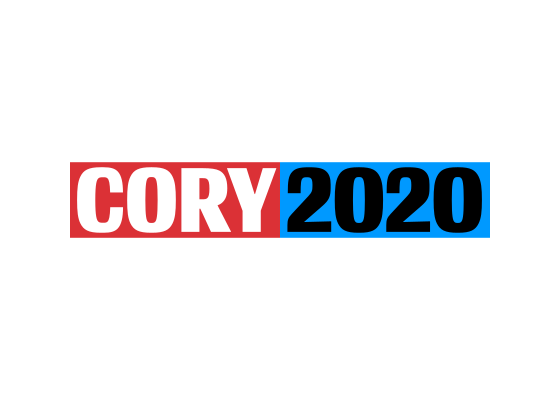
Cory Booker’s 2020 presidential campaign logo featured bold blue and red letterforms in a vertical stack spelling “CORY” with patriotic colors reflecting his message of unity and love. The New Jersey senator intentionally launched on February 1, the first day of Black History Month, with a “We Will Rise” video emphasizing inclusion before suspending the campaign on January 13, 2020.
Meaning and Symbolism
- Bright blue (#0099ff) serves as the primary color, conveying optimism, hope, and progressive Democratic values central to Booker’s campaign message
- Red accent (#db3136) adds patriotic contrast and energy while avoiding full red-white-blue clichés common in political branding
- Vertical stacking of “CORY” creates bold, memorable visual presence on yard signs, social media, and rally stages
- Clean, geometric letterforms suggest modernity and forward-thinking policy positions on climate, healthcare, and criminal justice reform
- White space and breathing room between letters conveys openness and accessibility, matching Booker’s emphasis on bringing people together
History and Evolution
Cory Booker announced his 2020 presidential campaign on February 1, 2019, with a video titled “We Will Rise” posted to his YouTube channel. The New Jersey senator intentionally chose the first day of Black History Month to launch his bid, becoming one of multiple senators seeking the Democratic nomination. Booker positioned himself as a unifying candidate, frequently referencing his “love” message and emphasizing bringing Americans together across racial, economic, and political divides.
Booker’s campaign emphasized his track record as Newark mayor from 2006-2013, where he gained national attention for hands-on leadership including personally rescuing a neighbor from a fire. As a senator since 2013, Booker championed criminal justice reform, environmental justice, and affordable housing. Despite strong debate performances and grassroots organizing, Booker struggled to gain traction in polls dominated by Joe Biden, Bernie Sanders, and Elizabeth Warren. The campaign faced fundraising challenges, failing to qualify for the November and December 2019 debates. On January 13, 2020, just weeks before the Iowa caucuses, Booker suspended his campaign, citing inability to raise funds necessary to compete. He endorsed Biden in March 2020 after Biden became the presumptive nominee. Booker’s campaign was noted for its positive, love-centered message in contrast to attack-focused competitors.
Typography and Design
The Booker campaign logo employed bold, custom sans-serif letterforms with substantial weight and geometric construction. The vertical stacking of “CORY” created a compact, attention-grabbing composition ideal for social media avatars and campaign signs. The bright blue dominated the palette, with red used as strategic accent rather than equal partner, differentiating from traditional red-white-blue political schemes. The modern, almost brutalist treatment of the letterforms suggested progressive policy positions while maintaining accessibility through clean shapes. The logo worked across digital platforms, yard signs, t-shirts, and rally backdrops, though it faced criticism for lowercase first name informality in a presidential race. The overall system balanced contemporary design trends with political campaign requirements for visibility and instant recognition.
Frequently Asked Questions
Who designed the Cory Booker 2020 campaign logo? The designer of the Booker campaign logo has not been publicly documented, though it was developed in late 2018 or early 2019 ahead of the February 1 announcement.
When was the Cory Booker logo last used? The logo was active from February 1, 2019, until Booker suspended his campaign on January 13, 2020, a span of approximately 11 months during the Democratic primary.
What do the colors in the Cory Booker logo represent? The bright blue represents optimism, hope, and progressive Democratic values central to Booker’s message of unity, while red adds patriotic energy and contrast without overwhelming the design with traditional red-white-blue political clichés.
More logos with similar colors