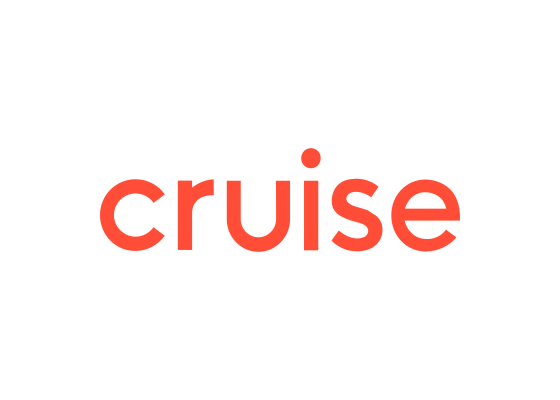
Cruise’s vibrant red wordmark embodies the energy and innovation of autonomous vehicle technology developed in San Francisco. The bold, friendly letterforms communicate confidence and approachability for self-driving cars that have logged millions of autonomous miles, while the warm red-orange hue differentiates the GM-owned subsidiary from traditional automotive brands.
Meaning and Symbolism
- Vibrant red-orange (#ff4d37) conveys energy, innovation, and forward-thinking technology, essential for a company pioneering autonomous vehicles
- Warm, friendly color palette makes self-driving technology feel approachable rather than intimidating or robotic to potential riders
- Bold sans-serif letterforms suggest confidence and reliability, critical attributes when consumer trust in autonomous safety is paramount
- Horizontal orientation reflects motion, progress, and the road ahead, metaphorically representing the journey toward driverless transportation
- Simple wordmark emphasizes accessibility and clarity, avoiding technical complexity in favor of consumer-friendly branding
History and Evolution
Cruise Automation was founded in 2013 by Kyle Vogt and Dan Kan in San Francisco, initially developing aftermarket self-driving kits for existing vehicles. The company pivoted to building complete autonomous vehicle systems when General Motors acquired Cruise for over $1 billion in March 2016, recognizing the strategic importance of autonomous technology. Under GM’s ownership, Cruise received massive investment, raising $7.25 billion from SoftBank Vision Fund, Honda, Microsoft, Walmart, and others, reaching a $30 billion valuation by 2021.
Cruise deployed its first commercial robotaxi service in San Francisco in 2022, with distinctive all-electric Chevy Bolt EVs and custom-built Origin vehicles featuring no steering wheel or pedals. By mid-2023, Cruise operated hundreds of vehicles providing over 1 million driverless rides. However, in October 2023, California regulators suspended Cruise’s permits following safety incidents, forcing the company to pause operations nationwide. CEO Kyle Vogt resigned in November 2023, and GM subsequently restructured Cruise, laying off staff and scaling back deployment plans. Despite setbacks, Cruise represents GM’s multi-billion dollar bet on autonomous transportation, competing against Waymo, Tesla, and other self-driving developers.
Typography and Design
The Cruise wordmark features a custom sans-serif typeface with rounded, friendly letterforms that humanize autonomous technology. The lowercase letters create approachability, while consistent stroke weights maintain clarity at various sizes from app icons to vehicle livery. The distinctive “C” features a gentle curve that suggests motion and flow, while the “i” dot and terminal strokes incorporate subtle roundness. The vibrant red-orange color (#ff4d37) provides high visibility on white backgrounds and strong contrast on dark surfaces, ensuring recognition on busy city streets. The wordmark works horizontally for vehicle sides, apps, and websites while remaining legible when stacked vertically for app icons and compact applications.
Frequently Asked Questions
Who designed the Cruise logo? The designer of the Cruise logo has not been publicly documented, though it was likely developed or refined after GM’s 2016 acquisition as the company transitioned from hardware supplier to autonomous vehicle operator.
When was the Cruise logo last updated? The vibrant red-orange wordmark has remained consistent since at least 2018 as Cruise scaled its autonomous fleet, with no major rebrand documented despite leadership changes in 2023.
What do the colors in the Cruise logo represent? The vibrant red-orange represents energy, innovation, and forward-thinking technology in autonomous vehicles, while also conveying warmth and approachability to help consumers feel comfortable riding in driverless cars.