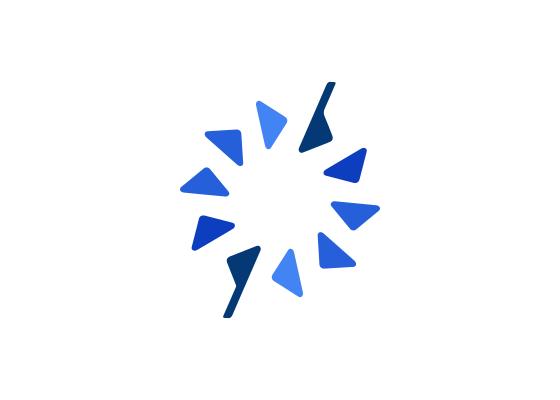
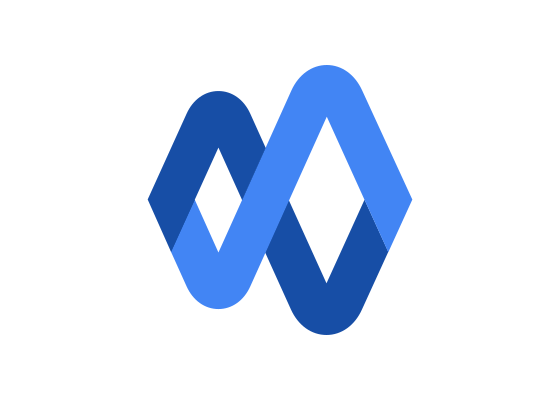
The Dart logo features a dynamic angular design in bright blue that reflects the programming language’s speed, flexibility, and modern approach to client application development across web and mobile platforms.
Meaning and Symbolism
- The bright blue suggests innovation, clarity, and the forward-thinking technology approach Google brings to language design
- The angular geometric form evokes speed, precision, and the directional focus implied by the “Dart” name
- Dark gray accents provide contrast and professional grounding for developer tools
- The sharp angles reference code structure and the compiled nature of the language
- The contemporary design positions Dart within modern development ecosystems
History and Evolution
Dart was developed by Google as a programming language specifically designed for client development, including web applications, mobile apps, server applications, and desktop software. The language emerged from Google’s experience with JavaScript limitations and the desire to create a more structured, performant alternative for modern application development.
Dart features object-oriented, class-based architecture with C-style syntax familiar to developers from Java, JavaScript, and similar languages. The language supports both ahead-of-time compilation to native code and compilation to JavaScript, enabling deployment across platforms. Key features include interfaces, mixins, abstract classes, reified generics, and strong type inference.
The language gained significant traction through Flutter, Google’s UI framework that uses Dart as its primary language. Flutter’s success in mobile development brought Dart wider attention and adoption, transforming it from a relatively niche language into a significant player in cross-platform development. The ecosystem grew to include comprehensive tooling, package management, and community resources supporting professional software development across multiple domains.
Typography and Design
The Dart wordmark employs a clean, modern sans-serif typeface with technical precision appropriate for developer tools. The letterforms feature consistent geometric construction that reflects the language’s systematic design. The accompanying symbol uses angular shapes in graduated blue tones, creating a distinctive mark that suggests motion and directionality while referencing the dart projectile metaphor. The design works effectively across developer documentation, IDE integrations, package repositories, and community resources where visual consistency supports brand recognition within the technical community.
Frequently Asked Questions
Who designed the Dart logo? The Dart logo was designed by Google’s internal design teams as part of the language’s development and marketing efforts. The specific designers involved in the visual identity have not been widely publicized.
When was the Dart logo last updated? The Dart logo has maintained consistent visual identity since the language’s development, with possible refinements as the ecosystem matured and Flutter brought increased attention to the platform.
What do the colors in the Dart logo represent? The bright blue conveys innovation, clarity, and modern technology, while the angular geometric design suggests the speed, precision, and compiled performance that distinguish Dart as a client-focused programming language.
More logos with similar colors