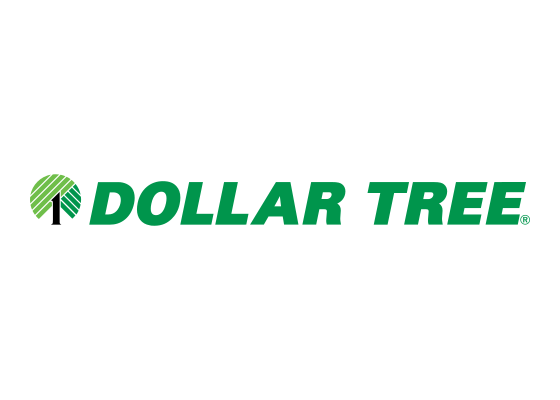
The Dollar Tree logo features a stylized green tree symbol paired with bold wordmark, using nature imagery to communicate growth, value, and environmental friendliness.
The logo’s defining element is the abstract tree icon rendered in a gradient of vibrant greens (#00954C to #6FBE4A), which appears above or beside the “DOLLAR TREE” wordmark. The tree silhouette employs simplified geometry, with rounded canopy shapes that suggest leaves or fruit clusters and a sturdy trunk that implies stability and roots. The bright green color palette evokes freshness, growth, and natural abundance, positioning the shopping experience as something wholesome and renewable. This nature association differentiates Dollar Tree from competitors using industrial colors like yellow or red, suggesting that value shopping can be a positive, “green” choice.
The mark’s construction balances organic curves with geometric structure, ensuring the tree remains recognizable at small scales while providing enough detail to feel crafted rather than generic. The two-tone green gradient adds dimensional depth without complicating reproduction, as the mark simplifies effectively to single-color applications when necessary. This flexibility serves the brand’s extensive signage needs across more than 15,000 store locations.
Meaning and Symbolism
- Tree imagery: Represents growth, stability, and natural abundance, suggesting that value shopping is sustainable and that customers can cultivate household savings over time.
- Green color: Conveys freshness, environmental consciousness, and renewal, differentiating the brand from competitors while suggesting products are wholesome and guilt-free.
- Rounded forms: Create approachability and friendliness, making discount shopping feel welcoming rather than desperate or cheaply transactional.
- Upward growth: The tree’s vertical orientation symbolizes prosperity and positive financial movement, implying customers are building wealth by shopping smart.
Design and History
The Dollar Tree brand emerged from Only $1.00, a name that made the pricing strategy explicit but lacked memorable character. The transition to “Dollar Tree” provided richer metaphorical possibilities, connecting value retail to natural cycles of growth and harvest. This rebranding positioned the company for expansion beyond its initial markets, as the nature-based name had broader appeal than purely price-focused nomenclature.
The tree symbol evolved to become the brand’s primary visual anchor, appearing on everything from storefront signs to shopping bags and employee uniforms. As Dollar Tree grew into a Fortune 500 company operating thousands of locations, the green tree became a neighborhood landmark, signaling accessible value to communities across North America. The mark’s friendly character helped soften perceptions of dollar stores as last-resort options, instead positioning Dollar Tree as a smart choice for budget-conscious shoppers.
The logo maintained consistency even as the company acquired Family Dollar and expanded its retail portfolio. While Family Dollar retained separate branding, the Dollar Tree mark continued to represent the original fixed-price concept. The tree symbol’s stability across decades of retail volatility demonstrates effective design that requires minimal updating to remain relevant.
Typography
The Dollar Tree wordmark employs a bold sans-serif typeface with sturdy proportions that complement the tree icon’s solid trunk imagery. The letterforms feature consistent stroke weights and straightforward geometry, communicating reliability and unpretentious value. The “DOLLAR” portion typically appears in darker or bolder treatment than “TREE,” emphasizing the pricing promise while the lighter “TREE” maintains connection to the natural symbolism. Letter spacing remains relatively open, ensuring legibility on everything from small price labels to large exterior signs. The all-caps construction projects confidence and stability, reassuring customers that one-dollar pricing remains firm despite economic fluctuations.
FAQ
Q: What does the tree in the Dollar Tree logo represent?
A: The tree symbolizes growth, natural abundance, and sustainable value, suggesting that smart shopping at Dollar Tree helps customers cultivate household savings while making wholesome, environmentally conscious choices.
Q: When did Dollar Tree change its name from Only $1.00?
A: Dollar Tree evolved from the Only $1.00 brand during the company’s expansion phase, though the exact transition date varies across markets. The tree-based name provided more memorable branding than literal pricing language.
Q: Why is the Dollar Tree logo green?
A: Green conveys freshness, environmental consciousness, and natural growth, differentiating Dollar Tree from competitors using yellow or red while suggesting that value shopping can be a positive, sustainable lifestyle choice.