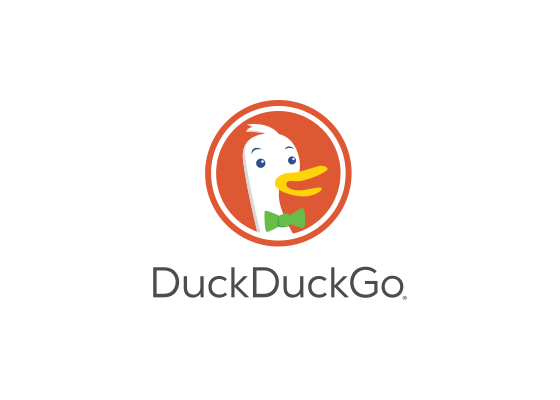
The DuckDuckGo logo features a friendly cartoon duck mascot wearing a green bow tie, rendered in a circular badge format with playful, approachable aesthetics.
The logo’s whimsical duck character creates immediate differentiation from competing search engines using abstract symbols or typographic marks. The mascot’s round head, simple facial features, and cheerful expression convey friendliness and trustworthiness, essential for a privacy-focused service asking users to trust an unfamiliar brand. The bright green bow tie (#67bd47) adds personality and provides a recognizable brand color, while the circular red border (#de5833) creates containment and visual weight.
The duck illustration uses flat color blocking with minimal shading, creating a design that scales effectively from 16-pixel favicons to billboard-scale advertisements. The multicolor palette (blue #2d4f8d, green #43a347 and #67bd47, red #de5833, gold #fed30a, gray #d5d7d8) gives the mark versatility across different applications while the circular format works seamlessly as social media avatars, app icons, and browser extensions. The playful character-based approach positions DuckDuckGo as an approachable alternative to corporate search giants rather than a technical product for security experts.
Meaning and Symbolism
- Duck mascot: References the brand name while creating memorable, friendly personality that builds trust
- Green bow tie (#67bd47): Provides distinctive brand element and suggests refinement without corporate formality
- Circular format: Creates self-contained mark that functions across digital contexts from favicons to mobile icons
- Playful illustration style: Positions privacy as accessible to everyone, not just technical users
Design and History
DuckDuckGo launched in 2008, founded by Gabriel Weinberg in Paoli, Pennsylvania. The company name references the children’s game “duck, duck, goose,” immediately suggesting the duck mascot as the natural logo choice. The character-based approach proved strategically valuable, making privacy-focused search feel approachable rather than paranoid or technically complex.
The current duck design emerged through iterative refinements, with earlier versions featuring slightly different proportions and more dimensional rendering. The flat color treatment that defines the current mark aligns with broader web design trends toward minimalism while ensuring the logo remains functional across increasingly diverse digital contexts. The bow tie element has remained consistent throughout, providing brand continuity even as other details evolved.
As DuckDuckGo grew from a niche privacy tool to a mainstream search alternative with 130+ employees by 2021, the logo’s friendly aesthetic helped demystify privacy technology. The mascot approach allowed DuckDuckGo to build emotional connection and brand loyalty in ways abstract corporate marks cannot, turning “switching to DuckDuckGo” into a personality statement rather than just a technical preference.
Typography
The DuckDuckGo wordmark, when it appears alongside the duck mascot, typically uses a friendly sans-serif typeface with rounded terminals. The letterforms maintain consistent stroke weights and generous spacing, ensuring readability while complementing the mascot’s approachable personality. The typography avoids overly technical or corporate aesthetics, instead reinforcing the brand’s positioning as user-friendly privacy for everyone. In most applications, the duck icon appears alone without the wordmark, demonstrating the mascot’s success as a standalone brand symbol.
FAQ
Q: Why does DuckDuckGo use a duck mascot instead of an abstract logo?
A: The duck mascot creates friendly, approachable personality that makes privacy-focused search feel accessible to mainstream users rather than just security experts. The character-based approach builds emotional connection and brand loyalty while directly referencing the company name, which comes from the children’s game “duck, duck, goose.”
Q: What does the green bow tie represent?
A: The green bow tie (#67bd47) provides a distinctive, memorable brand element that adds personality to the duck character. The accessory suggests a combination of friendliness and attention to detail, positioning DuckDuckGo as both approachable and trustworthy.
Q: Has the DuckDuckGo duck logo changed significantly over time?
A: While the core duck mascot with green bow tie has remained consistent since launch, the rendering style has evolved from more dimensional treatments to the current flat color blocking. This evolution aligns with broader web design trends while maintaining brand recognition.
More logos with similar colors