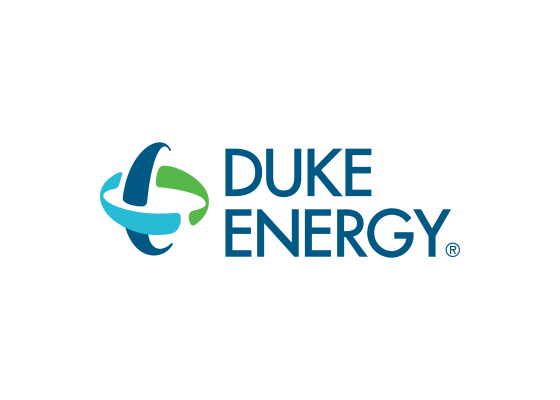
The Duke Energy logo features an abstract symbol suggesting flowing water or energy waves in blue, turquoise, and green gradients, paired with a clean sans-serif wordmark.
The Duke Energy identity centers on an organic, flowing symbol that suggests water, wind, or electrical current moving through space. The mark consists of curved, ribbon-like shapes that overlap and interweave, creating a sense of motion and transformation. The color gradient moves from deep blue through turquoise to bright green, symbolizing the company’s transition from traditional fossil fuel generation toward cleaner energy sources including hydroelectric, nuclear, and renewable power.
The flowing forms contrast with the rigid geometry typical of utility company logos, positioning Duke Energy as progressive and forward-looking rather than purely industrial. The symbol’s abstract quality allows it to represent multiple forms of energy simultaneously: flowing water for hydroelectric dams, wind currents for turbines, and the invisible movement of electrons through transmission lines. The wordmark uses a straightforward sans-serif typeface that grounds the organic symbol with corporate stability and reliability.
Meaning and Symbolism
- Flowing ribbons: The curved, overlapping forms represent energy in motion, the flow of electricity, and the interconnected nature of power generation and distribution.
- Blue-to-green gradient: The color progression symbolizes water, sustainable energy, environmental responsibility, and the company’s stated commitment to carbon reduction.
- Organic movement: The fluid shapes suggest adaptability, transformation, and the transition toward cleaner energy sources beyond coal and natural gas.
- Overlapping elements: The interwoven forms represent the integration of multiple energy sources and the complexity of modern grid infrastructure.
Design and History
Duke Energy traces its origins to the Catawba Power Company, founded in 1904 by James Buchanan Duke, the tobacco magnate who built the American Tobacco Company. Duke redirected his fortune toward hydroelectric power generation in the Carolinas, constructing a series of dams along the Catawba River. The company became Duke Power in 1924 and grew into one of the largest electric utilities in the southeastern United States.
The modern Duke Energy corporation was formed through multiple mergers and acquisitions, most significantly the 2012 merger with Progress Energy, creating the largest electric utility in the United States by customer base. The current logo reflects this expansion and the company’s positioning around cleaner energy and grid modernization. The flowing symbol replaced earlier logos that featured more traditional utility imagery, signaling a shift in corporate messaging toward sustainability and innovation.
Duke Energy operates in six states (North Carolina, South Carolina, Florida, Indiana, Ohio, and Kentucky), serving approximately 7.8 million electric customers and 1.6 million natural gas customers. The logo appears across the company’s extensive infrastructure, including power plants, transmission towers, service vehicles, and customer-facing materials.
Typography
The Duke Energy wordmark uses a clean, modern sans-serif typeface with slightly rounded terminals that echo the organic curves of the symbol. The letterforms are evenly spaced with consistent stroke weights, prioritizing clarity and professionalism. The wordmark typically appears in the deep blue from the symbol’s color palette, creating visual connection between text and icon while maintaining strong contrast against white backgrounds. The typeface’s neutral quality reflects the utility’s role as an essential infrastructure provider serving millions of customers.
FAQ
Q: What do the flowing shapes in the Duke Energy logo represent?
A: The curved, ribbon-like forms suggest energy in motion, representing electricity flow, water for hydroelectric power, and the company’s transition toward cleaner energy sources.
Q: Why does the logo use blue and green?
A: The blue-to-green gradient symbolizes water, environmental responsibility, and sustainable energy, reflecting Duke Energy’s stated commitment to carbon reduction and renewable power.
Q: When was Duke Energy formed?
A: The modern Duke Energy corporation was created through the 2012 merger with Progress Energy, though the company traces its roots to the Catawba Power Company founded in 1904 by James B. Duke.
More logos with similar colors