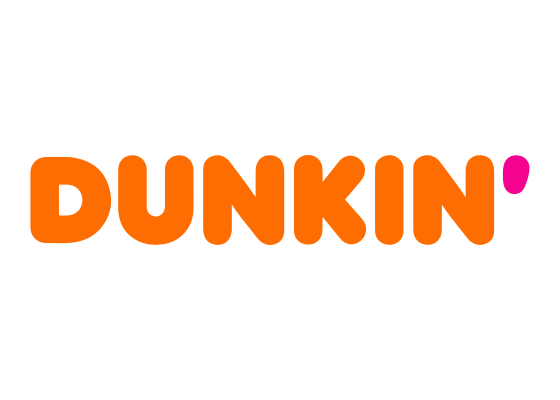
The Dunkin’ logo features bold, energetic wordmark in pink and orange, dropping “Donuts” from the name to signal the brand’s evolution into a beverage-focused quick-service chain.
The 2019 rebrand represented a strategic pivot for a company increasingly dependent on coffee sales rather than baked goods. By shortening the name to simply “Dunkin’,” the chain acknowledged that beverages now drive the majority of transactions, particularly during morning dayparts. The vibrant pink and orange color scheme remains unchanged, preserving decades of brand equity while the streamlined wordmark suggests efficiency and modernity.
Jones Knowles Ritchie’s redesign maintains the confident, all-caps typography that has defined Dunkin’ since the 1970s, but removes the script elements and simplifies the letterforms for better digital reproduction. The bold, sans-serif treatment conveys energy and straightforwardness, appealing to customers seeking quick, reliable service rather than artisanal experiences. The lack of ornamentation signals that Dunkin’ competes on speed and value rather than premium positioning.
The color palette does considerable heavy lifting in maintaining brand recognition. The hot pink, rarely used in food branding, has become synonymous with Dunkin’ across the northeastern United States and increasingly nationwide. Paired with energetic orange, these hues suggest excitement, affordability, and approachability. The brand avoids the browns and earth tones favored by coffee competitors, instead embracing artificial, electric colors that feel deliberately unpretentious.
Meaning and Symbolism
- Name simplification: Dropping “Donuts” reflects the business reality that coffee and beverages now represent over 60% of sales, while the friendly contraction “Dunkin’” maintains approachability.
- Bold typography: The thick, confident letterforms communicate reliability and no-nonsense service, positioning Dunkin’ as efficient rather than precious about coffee culture.
- Pink and orange: These high-energy colors create visual distinction in a category dominated by earth tones, while signaling fun, accessibility, and lack of pretension.
- No tagline or descriptor: The logo trusts in brand recognition, assuming customers already know what Dunkin’ offers without explanatory text.
Design and History
Dunkin’ Donuts launched in 1950 with simple script lettering that evolved through the 1960s into a more structured wordmark. The iconic pink and orange color scheme emerged in the 1970s, creating powerful visual equity that persisted across numerous redesigns. The rounded, friendly typography of the 1980s-2018 logo featured lowercase letters and a warm, approachable personality that balanced the electric color palette.
The decision to rebrand as “Dunkin’” began with testing in 2018, when the company operated test markets using the shortened name. Customer research indicated that the “Donuts” portion felt limiting, particularly as the chain expanded its menu into sandwiches, snacks, and an ever-growing array of coffee and frozen beverage options. The full rollout in 2019 coincided with significant store redesigns emphasizing modern, beverage-focused layouts.
Jones Knowles Ritchie approached the rebrand with careful attention to preserving recognition while signaling change. The agency maintained the essential DNA, keeping the color blocking, bold presence, and energetic personality while stripping away decorative elements that didn’t translate well to digital environments. The result feels simultaneously familiar and refreshed, a delicate balance in updating a brand with seven decades of history.
Typography
The custom sans-serif typeface features thick strokes and minimal negative space, creating a powerful, compact wordmark that maintains visibility even at small sizes. The slightly condensed proportions allow the full name to fit comfortably on cups, packaging, and mobile screens without excessive horizontal space. Each letterform is constructed from simple geometric shapes, avoiding unnecessary flourishes or stylistic details. The vertical emphasis and minimal stroke contrast create a sturdy, reliable appearance that suggests consistency, an important attribute for a brand built on predictable experiences across thousands of locations. The typeface avoids the warmth of rounded terminals, instead embracing the efficiency of straight cuts and right angles.
FAQ
Q: Why did Dunkin’ drop “Donuts” from its name?
A: The name change reflects business reality. Beverages, particularly coffee, now represent the majority of sales. The shortened name positions the chain as a beverage-first destination while maintaining brand recognition through the distinctive “Dunkin’” nickname customers already used.
Q: How does the logo compare to competitors like Starbucks?
A: While Starbucks uses green, earth tones, and a circular emblem suggesting premium positioning, Dunkin’ embraces electric pink and orange with bold, straightforward typography. This creates clear differentiation, positioning Dunkin’ as unpretentious, fast, and value-focused rather than aspirational.
Q: Has the pink and orange color scheme ever changed?
A: The signature pink and orange palette has remained remarkably consistent since the 1970s, though exact hue specifications have been refined over time. This consistency has built powerful brand recognition, making the colors themselves immediately identifiable with the brand even without the wordmark present.
More logos with similar colors