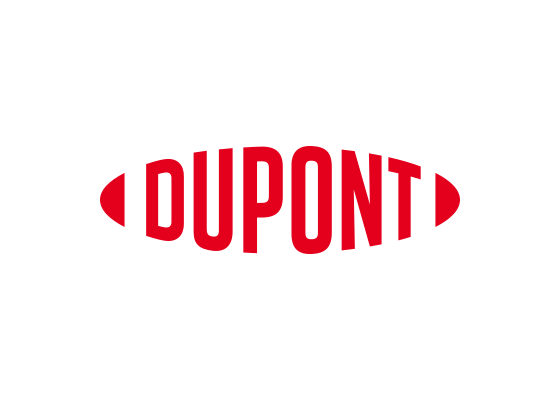
The DuPont logo features bold red typography in an oval frame, representing over two centuries of American innovation in materials science and specialty chemicals.
Lippincott’s identity for DuPont balances heritage with contemporary relevance for a company founded in 1802 as a gunpowder manufacturer. The red oval has framed the DuPont name since the 1960s, becoming one of the most recognizable symbols in the chemical industry. The current treatment simplifies earlier versions while maintaining the essential elements that signal trust and scientific authority. The vibrant red stands out in industrial contexts where blues and greens dominate, helping DuPont maintain visibility across diverse product categories from agriculture to electronics.
The logo needed to work following the company’s 2017 merger with Dow Chemical and subsequent 2019 spinoff that created three independent companies focused on agriculture, materials science, and specialty products. The red oval identity remained with the specialty products company, maintaining continuity with DuPont’s historic innovations including nylon, Teflon, and Kevlar. The mark communicates stability and technical expertise, essential attributes for a B2B brand serving manufacturers and industrial clients who depend on consistent material properties and supply chain reliability.
Meaning and Symbolism
- Red Oval Frame: The continuous shape suggests completeness and protection while the red color conveys energy, confidence, and American industrial heritage.
- Bold Sans-Serif Typography: The geometric letterforms communicate scientific precision and modern manufacturing capability without unnecessary ornament.
- Uppercase Treatment: The all-caps wordmark projects authority and seriousness appropriate for a company whose products enable critical applications from aerospace to medical devices.
- Color Consistency: The specific red shade has become synonymous with DuPont across generations, building equity through unwavering visual consistency.
Design and History
E.I. du Pont de Nemours and Company began in 1802 near Wilmington, Delaware, as a gunpowder mill founded by French immigrant Éleuthère Irénée du Pont. The company supplied the U.S. military through the Civil War and World War I before diversifying into chemicals and materials in the 20th century. DuPont’s innovations transformed American life through products like nylon stockings, Teflon-coated cookware, and Kevlar body armor, making the brand synonymous with materials science advancement.
The red oval logo emerged in the 1960s as DuPont transitioned from a chemicals conglomerate into a science-based specialty products company. The mark needed to work across increasingly diverse product lines serving industries from agriculture to aerospace. Lippincott’s refinements over subsequent decades maintained the oval framework while optimizing typography and proportions for contemporary applications. The logo appears on everything from seed bags to semiconductor manufacturing equipment, always signaling DuPont’s commitment to materials science innovation.
The 2017 merger with Dow Chemical created the world’s largest chemical company, though the combined entity soon split into three focused businesses. The specialty products division retained the DuPont name and red oval, emphasizing continuity with the company’s innovation legacy. This decision recognized that the DuPont brand carried substantial equity in markets where customers value long-term reliability and scientific credibility over trendy repositioning.
Typography
The DuPont wordmark uses a clean, geometric sans-serif typeface with even stroke weights and tight letter spacing. The letterforms are slightly condensed, allowing the name to fit comfortably within the oval frame without appearing cramped. The capital D and P receive no special emphasis, creating a unified word rather than a set of initials. The typeface feels technical and precise, qualities essential for a brand built on exacting material specifications and manufacturing tolerances. The white letters against red background ensure maximum contrast and legibility across industrial environments.
FAQ
Q: What does DuPont manufacture today?
A: Following the 2019 corporate restructuring, DuPont focuses on specialty products including electronics materials, water treatment solutions, protective equipment, and advanced polymers. The agriculture business became Corteva, while commodity chemicals remained with Dow Inc. The DuPont name and logo stayed with the specialty products division.
Q: Why has DuPont kept the same logo design for so long?
A: The red oval has built extraordinary recognition value over six decades in industrial markets where consistency signals reliability. For customers specifying materials in long-term applications, the unchanging logo reinforces DuPont’s stability and commitment to consistent product performance. In B2B contexts, frequent rebranding can suggest instability rather than progress.
Q: What are DuPont’s most famous inventions?
A: DuPont developed or commercialized nylon (1935), Teflon (1938), Kevlar (1965), and numerous other materials that became household names. These innovations established DuPont’s reputation for materials science leadership, making the red oval logo a symbol of American industrial innovation across generations of engineers and manufacturers.