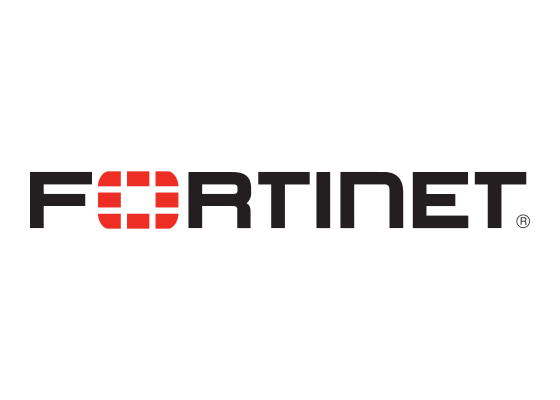
The Fortinet logo features a bold red fortress icon (#ee2e24) paired with gray and black typography (#231f20), creating a powerful mark that immediately communicates network defense, security infrastructure, and the protection of digital assets.
The mark’s most distinctive element is the stylized fortress or shield symbol built from geometric forms suggesting walls, battlements, or fortified structures. This literal interpretation of the “Forti-” prefix provides instant visual communication of the company’s cybersecurity mission. The bright red color conveys urgency, alert status, and the critical importance of network security, while the dark gray typography maintains professional credibility.
The logo’s compact square proportion works efficiently across enterprise software interfaces, hardware appliance panels, security dashboards, and marketing materials. The bold red icon ensures visibility in crowded security operations centers where multiple vendor products compete for attention. The mark must function globally across diverse industries from healthcare to finance to government.
Meaning and Symbolism
- Fortress icon: Literally represents fortification, defense, and the protection of network infrastructure from cyber threats
- Bright red: Conveys urgency, alert status, security warnings, and the critical nature of cybersecurity protection
- Geometric construction: Suggests precision, systematic defense, and the layered security architecture Fortinet provides
- Bold presentation: Communicates strength, reliability, and confidence in preventing network breaches and attacks
Design and History
Fortinet was founded in 2000 by brothers Ken Xie and Michael Xie, initially focused on developing the FortiGate firewall appliance. The fortress iconography in the logo directly references both the company name and its core mission: fortifying networks against cyber threats. The red-and-gray palette emerged as the company grew from firewall specialist to comprehensive cybersecurity platform provider.
The mark has remained remarkably consistent as Fortinet expanded its product portfolio beyond firewalls to include intrusion prevention, endpoint security, wireless access points, and the Security Fabric architecture launched in 2016. The fortress symbol proved flexible enough to represent this broadening mission while maintaining instant recognition of the company’s defensive focus.
The logo appears on physical firewall appliances deployed in data centers worldwide, security software dashboards monitoring network traffic, and marketing materials targeting chief information security officers. The bold red icon has become a recognized symbol in enterprise IT security alongside competitors Palo Alto Networks, Cisco, and Check Point.
Typography
The Fortinet wordmark employs a bold sans-serif with slight geometric qualities and consistent stroke weights. The letterforms maintain strong horizontal emphasis creating stability, while the overall treatment feels modern and tech-forward. The capitals convey authority appropriate for enterprise cybersecurity, while the clean presentation ensures legibility across hardware panels, software interfaces, and documentation.
FAQ
Q: What does the Fortinet fortress symbol represent?
A: The fortress icon literally represents fortification and defense, visually communicating Fortinet’s mission to protect network infrastructure and digital assets from cyber threats, while referencing the “Forti-” prefix in the company name.
Q: When was Fortinet founded?
A: Fortinet was founded in 2000 by brothers Ken Xie and Michael Xie in Sunnyvale, California, initially focused on the FortiGate firewall appliance before expanding into comprehensive cybersecurity solutions.
Q: Why is the Fortinet logo red?
A: The bright red (#ee2e24) conveys urgency, security alerts, and the critical importance of cybersecurity protection, while ensuring high visibility in security operations centers where IT professionals monitor network threats.
More logos with similar colors