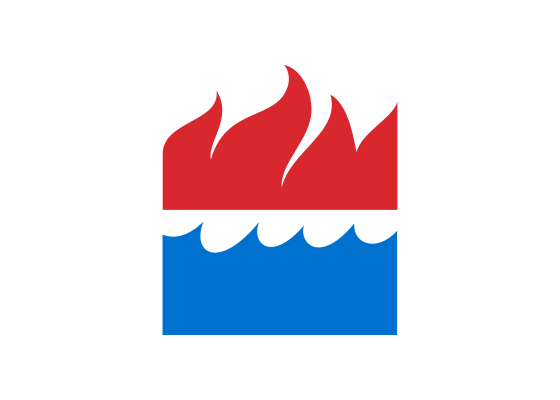
The HarperCollins logo features an abstract flame or torch icon rendered in red and blue, paired with clean typography. Designed by Chermayeff & Geismar & Haviv, the mark symbolizes the enlightenment and knowledge that books provide.
The flame icon serves as the primary graphic device, creating instant recognition while carrying layered meaning. The upward movement suggests aspiration, growth, and the illuminating power of literature. The dual-color treatment adds visual interest without introducing complexity, allowing the mark to remain clean and reproducible across applications. The icon’s abstract quality gives it longevity, avoiding literal interpretations that might feel dated as design trends evolve.
The blue and red palette establishes heritage and authority while maintaining accessibility. Blue conveys trust, intelligence, and reliability, qualities essential for a publisher managing both literary fiction and educational texts. Red adds energy and passion, suggesting the emotional resonance of great storytelling. Together, these colors create visual warmth without sacrificing the professionalism expected from one of the Big Five publishers. The palette also ensures visibility across applications, from book spines to digital storefronts.
The typography balances tradition with contemporary clarity. The wordmark uses clean, sturdy letterforms that feel substantial without being heavy. This weight suggests the permanence of published works while remaining modern enough for digital contexts. The even letter spacing creates stability and ensures legibility at small scales, crucial for applications like mobile app icons and social media avatars where publishers increasingly connect with readers.
Meaning and Symbolism
- Flame Icon: The torch or flame represents enlightenment, knowledge, and the illuminating power of literature and ideas conveyed through books.
- Dual Colors: The blue and red combination merges trust and authority with passion and emotion, reflecting publishing’s role in both education and entertainment.
- Upward Movement: The flame’s vertical thrust suggests aspiration, growth, and the transformative potential of reading and learning.
- Abstract Design: The non-literal interpretation ensures timeless appeal while allowing multiple interpretations that resonate across HarperCollins’ diverse catalog of titles and genres.
Design and History
HarperCollins formed through the merger of two distinguished publishing houses with deep historical roots. Harper & Brothers, founded in New York in 1817, established itself as one of America’s premier literary publishers, introducing works by Mark Twain, the Brontë sisters, and other major authors. William Collins, Sons began in Scotland in 1819, building a reputation for religious texts before expanding into general trade publishing. These parallel histories meant both houses had spent over 170 years building literary credibility before combining forces.
The modern company emerged when News Corporation, owned by Rupert Murdoch, acquired Harper & Row in 1987. Harper & Row itself was the result of Harper & Brothers merging with Row, Peterson & Company earlier in the century. Three years after acquiring the American publisher, News Corp purchased William Collins, Sons and combined the operations to create HarperCollins in 1990. This consolidation created one of the world’s largest English-language publishers, with imprints spanning literary fiction, commercial fiction, non-fiction, children’s books, and religious publishing.
Chermayeff & Geismar & Haviv, renowned for corporate identity work including logos for NBC, PBS, and National Geographic, developed the HarperCollins mark to unify these heritage brands under a contemporary visual identity. The challenge involved honoring both publishers’ literary legacies while creating a forward-looking mark suitable for an industry transitioning from print to digital formats. The flame icon provided symbolic weight without referencing outdated printing technologies or analog book production.
The logo needed to work across HarperCollins’ numerous imprints, which maintain their own identities while operating under the parent brand. Major imprints include HarperOne for religious and spiritual titles, William Morrow for commercial fiction, Avon for romance, and children’s divisions like HarperTeen and HarperFestival. The parent logo appears on corporate materials, publisher colophons, and co-branding situations where the HarperCollins name adds credibility and marketing strength to imprint releases.
Typography
The wordmark employs a custom sans-serif typeface with sturdy proportions and consistent stroke weights. The letterforms avoid decorative details that might compete with the flame icon or feel dated as typography trends evolve. The uppercase H and lowercase following letters create visual hierarchy while maintaining approachability, avoiding the formality that all-caps treatments might introduce. The moderate x-height and generous counter spaces ensure clarity in small-scale applications, from book spine typography to website footer credits. This typographic restraint allows the logo to serve its function without calling attention to itself, letting published content take center stage.
FAQ
Q: What do the Harper and Collins names represent?
A: Harper refers to Harper & Brothers, the American publishing house founded in New York in 1817. Collins represents William Collins, Sons, the Scottish publisher established in Glasgow in 1819. Both houses had over 170 years of independent history before merging in 1990.
Q: Is HarperCollins part of a larger media company?
A: Yes, HarperCollins is a subsidiary of News Corp, the media conglomerate controlled by the Murdoch family. News Corp acquired Harper & Row in 1987 and William Collins in 1990, combining them to form HarperCollins.
Q: How many books does HarperCollins publish annually?
A: HarperCollins publishes thousands of titles annually across its numerous imprints, making it one of the Big Five English-language publishers alongside Penguin Random House, Simon & Schuster, Hachette, and Macmillan. The company operates globally with offices in multiple countries and publishes in multiple languages.
More logos with similar colors