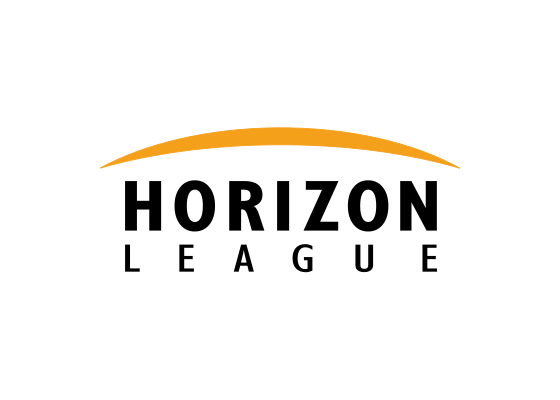
The Horizon League logo features bold orange typography with a distinctive horizon line integrated into the letterforms, representing the NCAA Division I conference’s geographic reach across the Great Lakes region and its forward-looking competitive vision.
Founded in 1979 as the Midwestern City Conference, the league has evolved through name changes and membership shifts while maintaining a focus on urban universities in America’s industrial heartland. The bright orange brand creates energetic presence in the competitive landscape of mid-major college athletics.
Meaning and Symbolism
- Orange color conveys energy, optimism, and the conference’s ambition to compete with power conferences for NCAA tournament success
- Horizon line element references the league name while suggesting limitless potential and geographic expanse
- Bold typography ensures visibility across broadcast graphics, arena signage, and digital platforms
- Clean design balances between professional collegiate branding and accessible school spirit
- Modern approach positions the conference as forward-thinking despite its roots in traditional Midwest college athletics
History and Evolution
The conference launched in 1979 as the Midwestern City Conference with six founding members focused on urban universities in the region. It became the Midwestern Collegiate Conference in 1985 before adopting the Horizon League name in 2001 to better reflect geographic diversity as membership expanded. Twenty-four different schools have participated over the decades, with the league currently operating with twelve members following various realignment shifts driven by NCAA Division I conference reorganization.
The Horizon League competes primarily in the NCAA Division I level for all sports, with member schools located in and around the Great Lakes region including cities like Milwaukee, Detroit, Cleveland, and Indianapolis. The orange branding emerged as part of the 2001 name change and rebrand, creating a distinctive identity separate from the blues, reds, and greens dominating college sports. The league has produced competitive basketball programs that regularly challenge power conferences in the NCAA tournament, with Butler’s back-to-back Final Four appearances in 2010 and 2011 as a Horizon League member representing the conference’s peak visibility.
Typography and Design
The wordmark employs strong, condensed letterforms with the horizon line cleverly integrated as a design element rather than a literal illustration. The typography balances between aggressive athletic branding and the institutional credibility required for NCAA Division I competition. The orange selected sits at high saturation and brightness, ensuring maximum visibility in broadcast environments where the conference mark appears alongside school logos during games and tournament coverage. The design system provides flexibility for various applications from championship merchandise to broadcast graphics while maintaining consistency across all conference sports and events throughout the academic year.
Frequently Asked Questions
Who designed the Horizon League logo? The current orange branding was developed as part of the 2001 rebrand when the conference adopted its current name, though specific agency or designer credits are not widely publicized. The design established a distinctive identity separate from member school brands.
When was the Horizon League logo last updated? The core orange wordmark has remained consistent since the 2001 name change, with only minor refinements for digital optimization and broadcast graphics standards as television coverage of conference games has expanded over the past two decades.
What do the colors in the Horizon League logo represent? The orange creates distinctive presence in the crowded landscape of NCAA Division I conference branding while conveying energy, optimism, and the competitive ambition that has produced NCAA tournament success stories like Butler’s Final Four runs and other breakthrough performances by member schools.