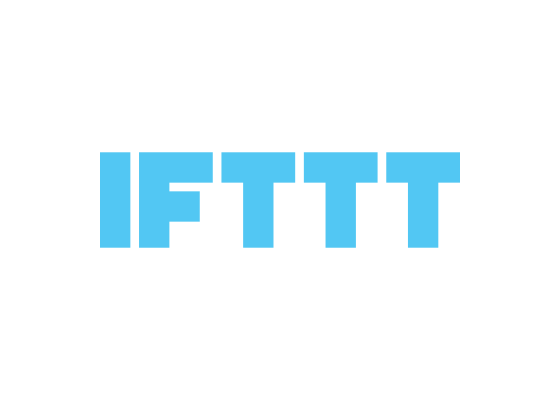
The IFTTT logo features a clean, lowercase wordmark in bright sky blue (#52c7f3) that conveys automation, connectivity, and logical simplicity.
The logo’s all-lowercase abbreviation creates a distinctive, compact identity from the full name “If This Then That.” The letterforms use a friendly, geometric sans-serif with consistent stroke weights and slightly rounded terminals, balancing technical precision with approachability. The bright blue colorway suggests digital connectivity and reliable automation workflows, avoiding the aggressive oranges of competing automation platforms while creating a calmer, more trustworthy appearance.
The wordmark’s horizontal emphasis and tight letter spacing create efficient composition, important for an already-long five-letter abbreviation. The design deliberately projects simplicity and clarity, reinforcing IFTTT’s value proposition: making conditional logic programming accessible to non-technical users through graphical “applets.” The blue intensity conveys the excitement of automation without feeling overwhelming, positioning IFTTT as empowering rather than intimidating.
Meaning and Symbolism
- Sky blue (#52c7f3): Represents digital connectivity, cloud-based automation, and the reliable execution of programmed workflows
- Lowercase abbreviation: Creates accessible, approachable identity from potentially intimidating programming concepts
- Geometric letterforms: Balances logical precision with human-friendly design suitable for consumer automation
- Clean simplicity: Reflects the platform’s mission to make conditional programming intuitive and graphical
Design and History
IFTTT launched in 2011 as one of the first consumer-facing automation platforms, translating programming concepts like conditional logic into simple trigger-action recipes. The acronym “IFTTT” abbreviates the programming conditional statement “If This Then That,” making technical concepts accessible through memorable branding. The logo emerged during the platform’s early growth as partnerships expanded to include hundreds of services from smart home devices to social media platforms.
The lowercase treatment became characteristic of IFTTT’s identity, appearing consistently across web interfaces, mobile apps, and even in spoken references where users pronounce the letters individually. The blue color choice created differentiation from Zapier’s orange while establishing calmer, more technical credibility than competitors. As IFTTT evolved from free recipes to subscription-based “Pro” plans, the logo remained unchanged.
The mark’s consistency through the platform’s transition from “recipes” to “applets” terminology and from consumer-only to business-focused services demonstrated its flexibility. The simple wordmark proved durable enough to represent both personal smart home automations and enterprise workflow integrations without requiring separate brand identities.
Typography
The IFTTT wordmark employs a geometric sans-serif with subtle humanist characteristics. The letterforms feature consistent stroke weights and generous counters that ensure legibility when the five-letter abbreviation appears at small sizes in mobile app icons or browser extensions. The lowercase ‘i’ includes a circular dot that maintains friendly personality, while the repeated ’t’ characters create visual rhythm. The terminal curves on letters like ‘f’ and ’t’ soften the otherwise geometric construction, preventing the mark from feeling cold or overly technical. This typographic approach makes conditional logic programming feel approachable rather than intimidating.
FAQ
Q: What does IFTTT stand for?
A: IFTTT abbreviates “If This Then That,” a programming conditional statement. The name makes technical automation concepts accessible by using familiar logical language, while the acronym creates a compact, memorable brand identity.
Q: Why does IFTTT use lowercase letters?
A: The lowercase treatment creates approachable, accessible identity appropriate for a platform democratizing programming automation for non-technical users. The styling positions IFTTT as friendly and user-centric rather than enterprise-technical.
Q: What does the IFTTT blue color represent?
A: The sky blue (#52c7f3) represents cloud-based connectivity and reliable automation. The color creates calmer, more trustworthy appearance than competitors’ orange while suggesting the digital infrastructure that executes programmed workflows across hundreds of connected services.