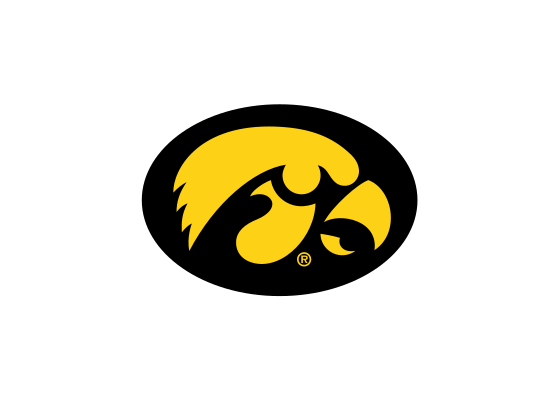
The Iowa Hawkeyes’ bold gold and black logo features the iconic Tigerhawk design, representing the University of Iowa’s 24 NCAA Division I athletic programs competing in the Big Ten Conference with a wrestling dynasty claiming 23 national championships and rich traditions across football, basketball, and Olympic sports.
Meaning and Symbolism
- Bright gold primary color (#fcd116) evokes Iowa’s agricultural heritage (corn fields), provides exceptional visibility in packed stadiums, and differentiates from Big Ten rivals
- Tigerhawk icon combines hawk (Iowa’s state bird) with aggressive, angular styling that suggests tiger-like ferocity and competitive intensity
- Black accent color adds sophistication and creates striking contrast that makes the gold appear even more vibrant on uniforms and merchandise
- “Hawkeyes” nickname honors Chief Black Hawk of the Sauk tribe, who lived in Iowa territory, connecting the university to regional history
- Oval badge format allows flexible application across helmets, center-court logos, and uniforms where geometric shapes ensure consistent recognition
History and Evolution
The University of Iowa was founded in 1847 in Iowa City, becoming the state’s first public university. Athletic teams adopted the “Hawkeyes” nickname in the 1850s, referencing Chief Black Hawk and Iowa’s popular identity as the “Hawkeye State.” The gold and black color scheme emerged in the 1890s, selected by student vote to replace earlier color combinations. These colors provided excellent visibility and created memorable contrast that helped Iowa stand out in the Western Conference (predecessor to the Big Ten Conference, which Iowa joined in 1899).
Iowa’s athletic identity centers on wrestling dominance. The program has won 23 national team championships (tied for most all-time) and produced 85+ individual national champions under legendary coaches like Dan Gable, who compiled a 355-21-5 record from 1976-1997. Carver-Hawkeye Arena regularly sells out its 15,000-seat capacity for dual meets, making Iowa wrestling a cultural phenomenon that transcends sport in the state. The football program achieved prominence under Hayden Fry (1979-1998), who introduced the distinctive gold helmets with Tigerhawk logo that became Iowa’s most recognizable athletic symbol.
The Tigerhawk logo emerged in 1979 when newly hired football coach Hayden Fry collaborated with his son-in-law, a professional artist, to create a more aggressive hawk image for football helmets. The angular design combined hawk elements with tiger-like ferocity, earning the “Tigerhawk” nickname. The logo succeeded so dramatically that it spread from football to become Iowa’s primary athletic mark across all sports. Previous hawk logos featured more literal bird illustrations that lacked the fierce identity Fry sought. The Tigerhawk appeared on the famous gold helmets that Fry modeled after the Pittsburgh Steelers, even visiting the Steelers facility to study their gold paint formula. This visual identity helped Iowa achieve unprecedented success, winning three Big Ten titles and appearing in 14 bowl games during Fry’s tenure.
Typography and Design
The Iowa Hawkeyes wordmark employs a bold, collegiate-style typeface with strong horizontal emphasis and thick letterforms that ensure readability across massive stadium signage and television broadcasts. The typography balances tradition with contemporary athletic aesthetics, avoiding ornate serifs while maintaining enough character to feel distinctly collegiate rather than corporate. The gold (#fcd116) serves as the dominant brand color, appearing on football helmets, basketball courts, and wrestling mats where its brightness creates powerful visual impact under arena lighting. The Tigerhawk icon features aggressive angular lines suggesting speed and attacking motion, with sharp beak, fierce eye, and feathered details rendered for visibility at distances spanning football field lengths. Black outlines and accents provide definition and prevent the gold from washing out against light backgrounds. The design system extends across Iowa’s 24 varsity sports, maintaining consistency while allowing sport-specific variations—football emphasizes the helmet Tigerhawk, basketball uses a circle logo with Tigerhawk center, and wrestling features aggressive bird-head versions appropriate for combat sport intensity.
Frequently Asked Questions
Who designed the Iowa Hawkeyes logo? The iconic Tigerhawk logo was created in 1979 by Hayden Fry’s son-in-law (a professional artist) at the request of Iowa’s newly hired football coach seeking a more aggressive identity for the program’s golden helmets.
When was the Iowa Hawkeyes logo last updated? While the core Tigerhawk design from 1979 remains Iowa’s primary mark, the university has refined color specifications, proportions, and created alternate logos over decades to adapt to digital media and merchandise applications.
What do the colors in the Iowa Hawkeyes logo represent? The gold symbolizes Iowa’s agricultural heritage and provides exceptional visibility, while black adds sophistication and creates the striking contrast that makes Iowa’s uniforms instantly recognizable across Big Ten competition.
More logos with similar colors