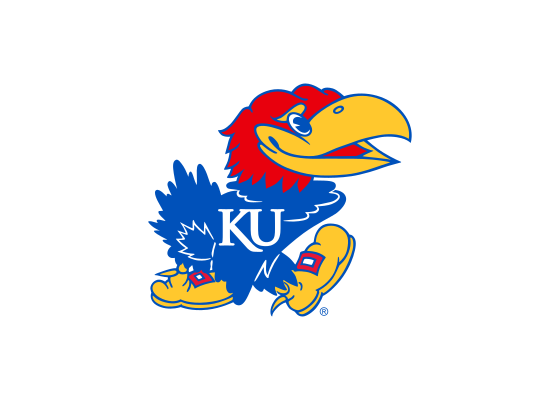
The Kansas Jayhawks logo features an aggressive blue jay with red and yellow accents, representing a university whose mythical mascot honors the anti-slavery Jayhawkers who fought for freedom during Kansas’s Bleeding Kansas era before the Civil War.
Meaning and Symbolism
- The “Jayhawk” is a mythical bird combining the blue jay and hawk, created as a symbol of Kansas free-state fighters who opposed slavery during the violent territorial conflicts of the 1850s
- The crimson and blue colors have been Kansas’s distinctive palette since 1896, carefully trademarked and protected to maintain one of college sports’ most recognizable color combinations
- The aggressive, forward-leaning stance of the jayhawk suggests the fighting spirit and moral conviction that defined the historical Jayhawkers who battled pro-slavery Border Ruffians
- The exaggerated features—oversized beak, intense eyes, muscular legs—transform the mythical creature into a credible athletic symbol suitable for Big 12 Conference competition
- The design’s movement and energy reflect Kansas basketball’s tradition of fast-paced, exciting play under legendary coaches Phog Allen, Roy Williams, and Bill Self
History and Evolution
The Jayhawk name appeared in Kansas newspapers by 1900, derived from the Kansas Jayhawkers who fought for the free-state cause during Bleeding Kansas. The term “jayhawker” itself combined “jay” (a loud, quarrelsome bird) with “hawk” (a predator), creating a fitting symbol for irregular fighters defending their principles. Early visual representations ranged from cute cartoon birds to more aggressive designs as athletic expectations evolved.
Kansas basketball established itself as a national power under coach Phog Allen, a student of basketball inventor James Naismith who taught at Kansas from 1898 until his death in 1939. The program has won three NCAA championships, most recently in 2008 and 2022, and plays in Allen Fieldhouse, one of college basketball’s most intimidating venues. The jayhawk design underwent significant updates in 1941, 1946, and 2006, each iteration increasing the bird’s athletic appearance and aggressive posture to match the program’s elite status.
Typography and Design
The current jayhawk design features bold, angular linework that emphasizes musculature and aggression through exaggerated proportions. The bird leans forward as if charging into competition, with one foot forward and wings positioned to suggest motion. The oversized beak and fierce expression transform what could be a comical mascot into a legitimate symbol of competitive intensity.
The crimson and blue color scheme creates maximum contrast and visibility, ensuring the logo reads clearly on Kansas’s blue home uniforms, white away jerseys, and crimson alternate apparel. The yellow beak and legs provide accent color that adds warmth and energy to the design. The illustration style balances cartoon accessibility with athletic credibility, making the jayhawk both approachable for young fans and respected by opponents.
Frequently Asked Questions
Who designed the Kansas Jayhawks logo?
The current aggressive jayhawk design emerged from a 2006 update led by the athletic department and brand consultants, building upon decades of evolution from earlier versions created by students and staff since the 1940s.
When was the Kansas Jayhawks logo last updated?
The 2006 redesign created the current forward-leaning, muscular jayhawk that projects appropriate intensity for elite Big 12 Conference and March Madness competition, with minor refinements for digital reproduction since then.
What do the colors in the Kansas Jayhawks logo represent?
Crimson and blue have been Kansas’s official colors since 1896, representing the university’s commitment to the Jayhawker legacy of fighting for freedom during Bleeding Kansas and the Civil War era.
More logos with similar colors