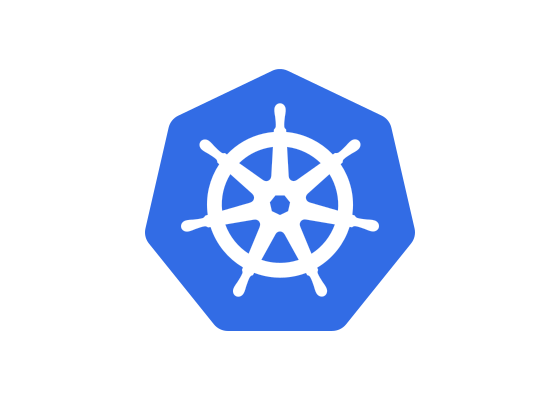
The Kubernetes logo features a distinctive blue ship’s wheel with seven spokes, representing the orchestration of containerized applications across distributed systems.
The nautical helm design directly references Kubernetes’ name, derived from the Greek word for “helmsman” or “pilot.” The wheel’s seven spokes create geometric symmetry while suggesting the coordination of multiple containers across server clusters. The blue (#326ce5) is professional and technical, establishing credibility for infrastructure software managing mission-critical production workloads at global scale.
The ship’s wheel metaphor proves remarkably apt for container orchestration. Just as a helmsman steers a ship through complex waters, Kubernetes navigates containerized applications through distributed infrastructure, handling deployment, scaling, load balancing, and self-healing. The geometric precision reflects the systematic, automated nature of orchestration while the nautical symbolism maintains human approachability for DevOps engineers managing cloud-native architectures.
Meaning and Symbolism
- Ship’s wheel: Represents orchestration, navigation, and steering containerized workloads across distributed infrastructure and cloud platforms
- Seven spokes: Suggests the original Google project codename “Project Seven” and the coordination of multiple containers within pods
- Nautical metaphor: Connects to “kubernetes” (helmsman), emphasizing guidance, control, and navigating complex distributed systems
- Blue authority: Conveys enterprise reliability and technical expertise for infrastructure managing billions of containers across Fortune 500 deployments
Design and History
Kubernetes originated at Google as Project Seven, inspired by Star Trek’s Seven of Nine character and reflected in the seven-spoked helm. Google open-sourced Kubernetes in 2014, donating it to the newly formed Cloud Native Computing Foundation in 2015. The helm logo became synonymous with cloud-native architecture as Kubernetes achieved de facto standard status for container orchestration.
The nautical theme distinguished Kubernetes from Docker’s whale logo and other infrastructure tools while the Greek etymology provided linguistic sophistication. The design proved adaptable across the explosive growth of Kubernetes adoption, from startups to enterprises, and across cloud providers offering managed Kubernetes services. The geometric mark scaled effectively from command-line interfaces to conference branding as KubeCon became the premier cloud-native event.
Typography
The wordmark employs a clean sans-serif with technical precision that balances approachability with engineering authority. The letterforms maintain clarity across documentation, dashboards, and terminal interfaces where engineers interact with Kubernetes daily. The professional typography reinforces enterprise credibility while the simplified spelling and distinctive helm create memorable brand recognition in crowded DevOps tooling landscapes.
FAQ
Q: What does the Kubernetes logo represent?
A: The ship’s wheel represents orchestration and navigation, connecting to “kubernetes” (Greek for helmsman) and symbolizing how the platform steers containerized applications across distributed systems.
Q: Why does the Kubernetes wheel have seven spokes?
A: The seven spokes reference the original Google internal project name “Project Seven,” inspired by Star Trek’s Seven of Nine character.
Q: Who created Kubernetes?
A: Google designed Kubernetes based on internal systems, open-sourcing it in 2014 and donating it to the Cloud Native Computing Foundation in 2015.
More logos with similar colors