Mesa/Boogie is an American guitar amplifier manufacturer founded in 1969 by Randall Smith in Petaluma, California, pioneering the boutique amplifier market with high-gain modifications to small Fender amps.
Meaning and Symbolism
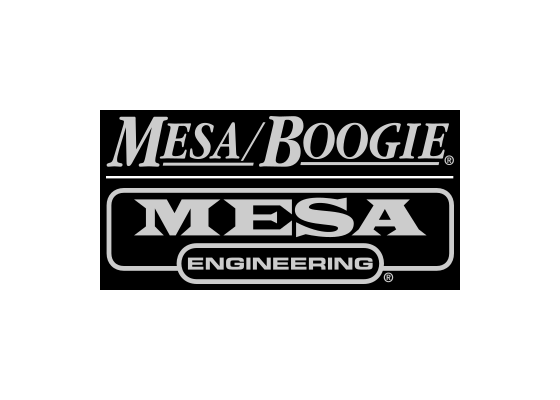
- The gray and white color palette (#CCCCCC, #FFFFFF) conveys timeless sophistication and professional-grade audio equipment quality, avoiding flashy colors in favor of understated elegance.
- The rectangular wordmark suggests solidity and reliability, essential qualities for touring musicians who depend on their gear night after night.
- Mesa/Boogie’s visual restraint reflects the brand’s focus on sonic performance over marketing flash, letting the amplifiers speak for themselves.
- The logo design emphasizes craftsmanship and engineering precision, values that resonate with serious guitarists seeking superior tone.
History and Evolution
Mesa/Boogie began in 1969 when Randall Smith opened a small repair shop in Mill Valley, California, modifying Fender Princeton amplifiers to produce dramatically higher gain and volume. The “Boogie” name originated when Carlos Santana tested an early modified amp and exclaimed it “really boogies,” with “Mesa” added later when the company relocated to Petaluma. Early adoption by rock legends including Santana, Keith Richards, and Larry Carlton established Mesa/Boogie’s reputation among professional musicians.
The company revolutionized guitar amplification by introducing the first high-gain preamp design in the Mark I series during the 1970s, followed by the iconic Mark IIC+ in 1983 and the Dual Rectifier in 1992. These innovations made Mesa/Boogie the amplifier of choice for metal, hard rock, and progressive music genres. The company maintained independent ownership under the Smith family for over 50 years before being acquired by Gibson Brands in 2021, ensuring continued production of their legendary amplifier designs while expanding distribution networks.
Typography and Design
The Mesa/Boogie logo employs a bold, uppercase typeface with distinctive forward-leaning letterforms that suggest energy and momentum. The rectangular frame containing the wordmark creates strong horizontal emphasis, symbolizing stability and grounding—metaphors appropriate for amplification equipment that literally forms the foundation of a guitarist’s sound. The gray-on-white or white-on-gray colorway (#CCCCCC, #FFFFFF) provides high contrast for visibility on amplifier faceplates while maintaining a professional aesthetic that appeals to both stage performers and studio engineers. The geometric simplicity of the design ensures reproduction clarity across all sizes, from amp badges to promotional materials.
Frequently Asked Questions
Who designed the Mesa/Boogie logo? The original Mesa/Boogie logo was developed internally by founder Randall Smith and his early team, reflecting the DIY ethos of the boutique amplifier movement rather than employing professional branding agencies.
When was the Mesa/Boogie logo last updated? The core Mesa/Boogie wordmark has remained largely consistent since the 1970s, with only minor refinements to ensure clarity across different amplifier models and product lines.
What does the rectangular frame in the Mesa/Boogie logo represent? The rectangular border symbolizes the amplifier chassis itself, containing and focusing the power within—a visual metaphor for how Mesa/Boogie amplifiers contain and shape raw electrical energy into refined musical tone.
More logos with similar colors