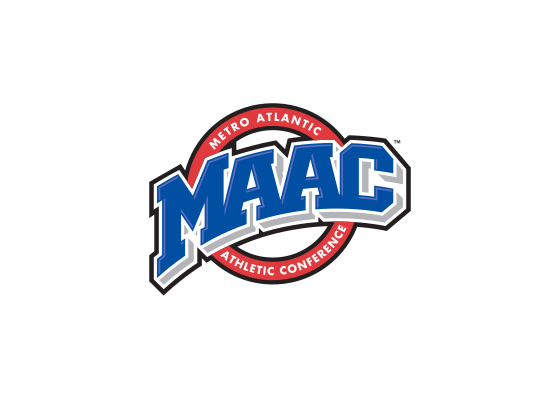
The Metro Atlantic Athletic Conference’s circular badge with blue, red, and silver honors the league’s northeastern identity, uniting eleven private institutions across Connecticut, New Jersey, and New York.
Meaning and Symbolism
- The circular format conveys unity among the conference’s eleven member schools, all relatively small private institutions concentrated in three northeastern states.
- The blue and red palette reflects traditional athletic conference colors while providing neutral representation that doesn’t favor specific member institutions.
- The silver/gray accents add sophistication appropriate for private institutions, many with Catholic heritage or affiliation.
- The regional focus evident in the name (Metro Atlantic) emphasizes the conference’s concentrated geographic footprint and shared northeastern identity.
History and Evolution
The Metro Atlantic Athletic Conference (MAAC) is a Division I collegiate conference consisting of eleven schools located in Connecticut, New Jersey, and New York. Members are predominantly private institutions, with the majority Catholic or formerly Catholic, including notable exceptions like Rider University and recent additions Monmouth University and Quinnipiac University, which are secular institutions.
The conference currently sponsors 23 sports and includes 17 associate member institutions that compete in MAAC for specific sports while maintaining primary membership in other conferences. This associate membership model allows the MAAC to support sports that might not have sufficient participation among core members, expanding competitive opportunities while maintaining conference identity.
The MAAC’s geographic concentration creates natural rivalries and reduces travel costs compared to more dispersed conferences. The relatively small, private institutional profile creates shared governance interests and competitive balance, though member schools vary significantly in enrollment and athletic budget. The conference competes primarily in basketball, where several MAAC schools have earned NCAA Tournament berths and occasional upsets against power conference programs. The conference’s Catholic institutional majority creates cultural connections beyond athletics, though the league welcomes secular institutions that share similar size, mission, and competitive philosophy.
Typography and Design
The MAAC logo employs confident typography that communicates both athletic intensity and institutional credibility. The letterforms balance traditional collegiate aesthetics with contemporary sports branding, ensuring the identity works across championship events, broadcast graphics, and digital platforms. The design maintains legibility at small sizes while providing visual impact for large-format applications like arena signage and tournament branding.
The circular badge format creates unity and tradition appropriate for a multi-sport conference spanning over four decades. The blue, red, and silver palette provides visual interest and recognition while remaining neutral among member institutions with diverse school colors. The overall brand system reflects the MAAC’s identity: a regionally focused conference of private institutions competing at Division I level while maintaining the personal scale and mission focus that distinguish smaller private colleges and universities from large public research institutions.
Frequently Asked Questions
Who designed the MAAC logo?
The Metro Atlantic Athletic Conference logo was developed through brand initiatives involving conference administrators and design consultants, though specific designer credits have not been widely publicized.
When was the MAAC logo last updated?
The logo has evolved over the conference’s history to maintain contemporary relevance while preserving elements that communicate the conference’s northeastern regional identity and private institutional character.
What do the colors in the MAAC logo represent?
The blue and red provide traditional athletic conference colors with neutral representation among member schools, while silver/gray accents add sophistication appropriate for the private institutions that comprise the conference’s membership.
More logos with similar colors