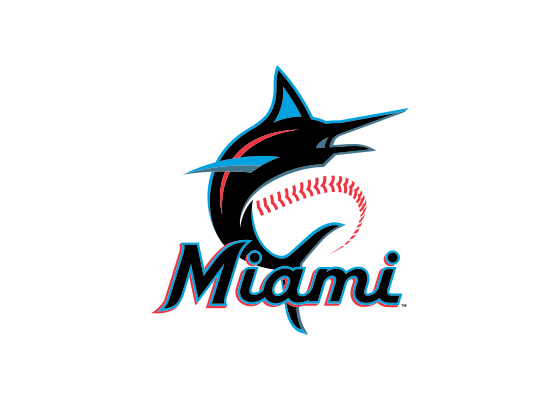
The Miami Marlins logo represents an expansion franchise established in 1993 as the Florida Marlins, winning two World Series championships (1997, 2003) despite never winning a division title, creating one of baseball’s most unusual competitive narratives.
The Marlins identity features vibrant Miami-inspired colors including electric blue, orange, yellow, and black that evoke South Florida’s tropical climate and Art Deco heritage. The bright teal blue serves as the primary brand color, referencing both the Atlantic Ocean and Miami’s distinctive architectural character. The bold color palette differentiates Miami within the National League East while projecting energy appropriate for South Florida’s international, multicultural market. This contemporary approach contrasts sharply with traditional baseball color schemes, reflecting Miami’s status as a modern, globally-connected city rather than historic baseball market.
Meaning and Symbolism
- Electric blue: References Atlantic Ocean and Miami’s tropical setting while creating contemporary differentiation
- Miami Art Deco: Bold color combinations evoke South Beach’s distinctive architectural and cultural heritage
- International appeal: Vibrant palette reflects Miami’s position as gateway to Latin America and Caribbean
- Modern identity: Contemporary colors distinguish Miami from traditional baseball markets
Design and History
The franchise began as the Florida Marlins in 1993 as a National League expansion team alongside Colorado, bringing Major League Baseball to South Florida. The original teal, black, and silver color scheme reflected 1990s sports design trends while attempting to create Florida-appropriate identity. The team played initially at Joe Robbie Stadium, sharing the facility with the NFL’s Miami Dolphins.
Remarkably, the Marlins won the World Series in just their fifth season (1997), defeating Cleveland in a dramatic seven-game series. This rapid championship success made the Marlins the fastest expansion team to win a title at the time. However, controversial owner H. Wayne Huizenga immediately dismantled the championship roster in a massive fire sale, trading away star players to reduce payroll and creating lasting distrust among fans.
The franchise won a second championship in 2003, defeating the New York Yankees as a wild card team. This victory continued the Marlins’ pattern of playoff success followed by roster dismantling, as ownership again traded away championship contributors. Despite two titles, the Marlins have never won a division championship, making them unique in professional sports for championship success without sustained regular season dominance.
The 2012 rebrand from Florida to Miami Marlins coincided with opening Marlins Park, a retractable-roof stadium in Little Havana. The new ballpark featured controversial modernist art installations including a home run sculpture that became polarizing symbol of the franchise’s aesthetic direction under Jeffrey Loria’s ownership.
Typography
The Marlins wordmark employs dynamic, angular letterforms that reflect Miami’s contemporary character and tropical energy. The typography projects modern sophistication appropriate for an international city while maintaining sports-appropriate boldness.
FAQ
Q: How did the Marlins win two titles without a division championship? A: The franchise won the 1997 and 2003 World Series as wild card teams, creating the unique distinction of two championships without ever winning the National League East division.
Q: Why did the team change from Florida to Miami? A: The 2012 rebrand coincided with opening Marlins Park in Miami, focusing identity on the city rather than entire state while adopting new colors reflecting Miami’s tropical, international character.
More logos with similar colors